“Begin with the end in mind.” — Stephen Covey
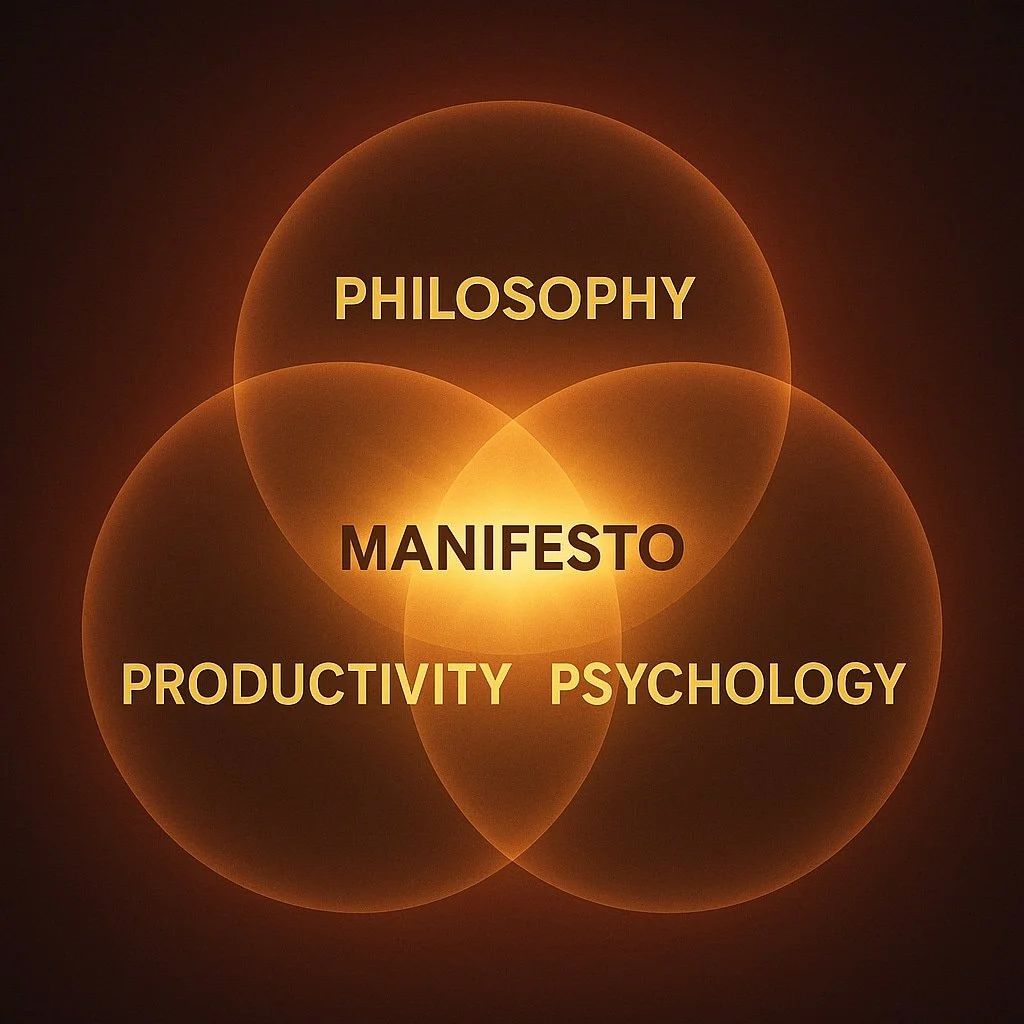
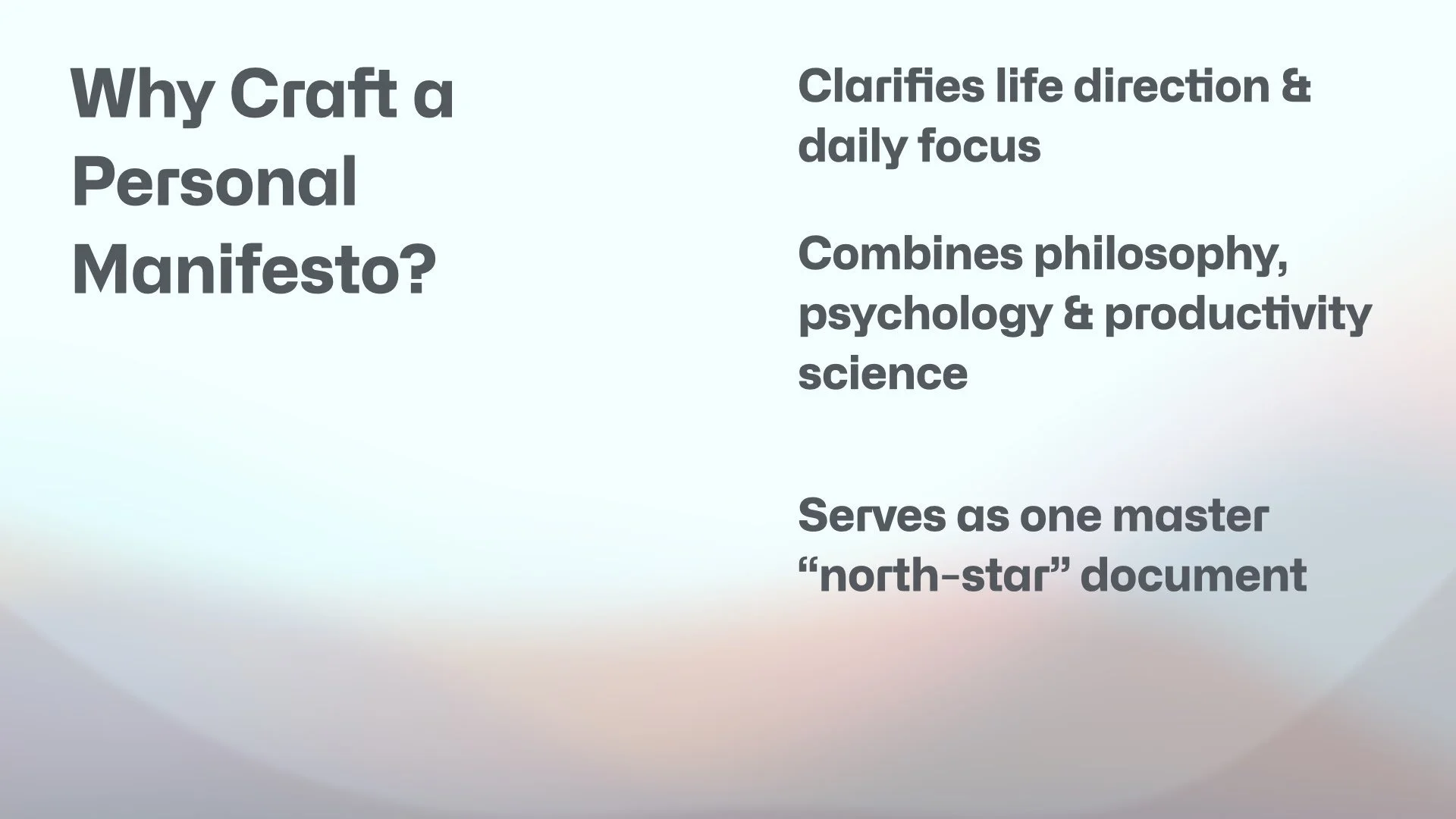
In the hustle of daily life, clarity can feel elusive. A personal manifesto cuts through the noise. It’s your North-Star document—a living synthesis of philosophy, psychology, and practical productivity science—that you review, refine, and lean on whenever life gets messy.
Below I expand on the ideas from my recent YouTube video, weaving in more depth, research links, and step-by-step therapy-informed exercises so you can start drafting (or sharpening) your own manifesto today.
1. Why a Personal Manifesto Outperforms Traditional Goal Lists
A manifesto is more than a bucket list of “someday” dreams. It’s a structured ecosystem that connects:
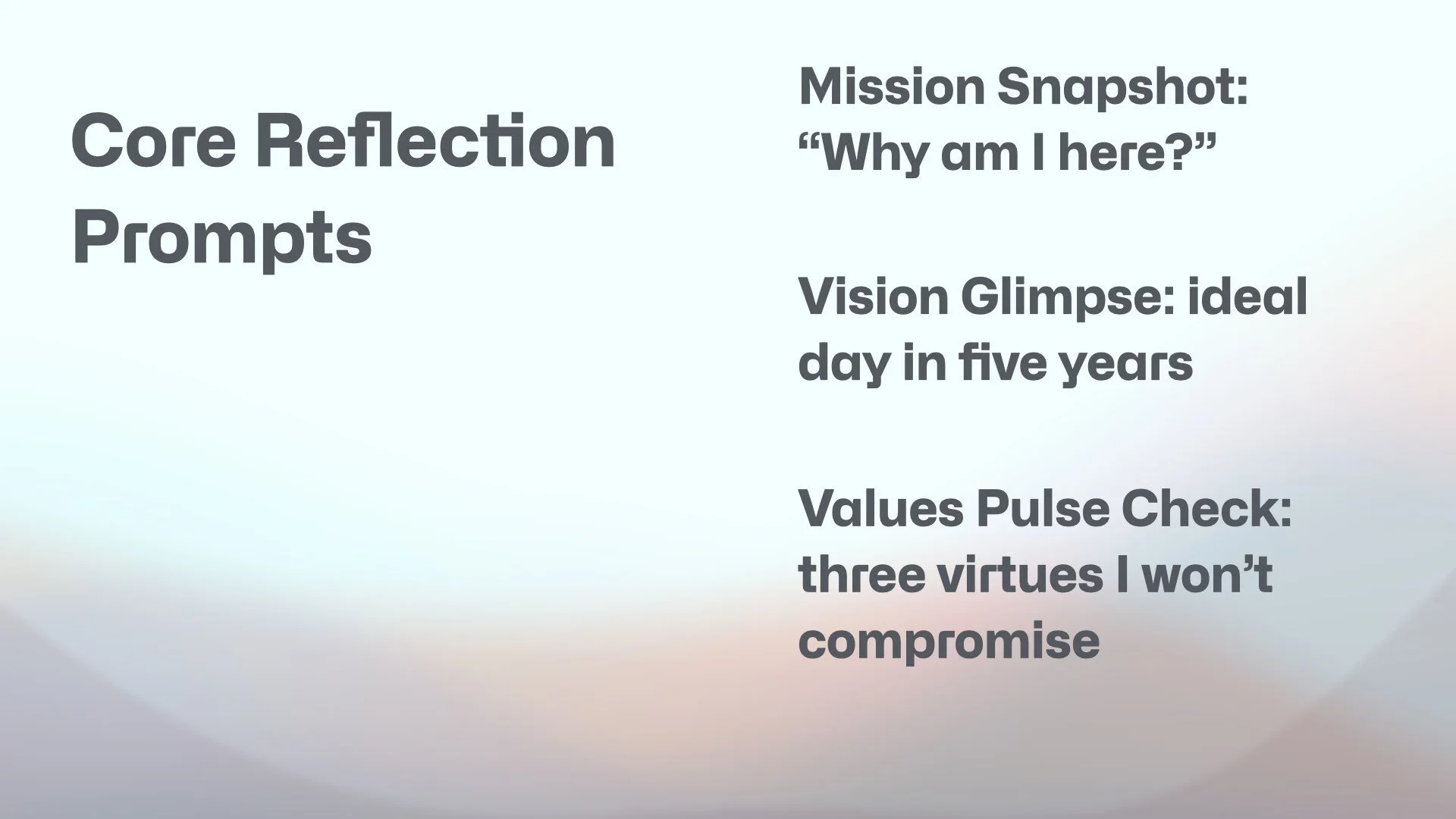
- Mission & Vision – your macro “why” and five-year future snapshot
- Core Values – the Golden-Mean virtues that anchor your choices
- Roles over Goals – identity-based commitments that outlast any single task
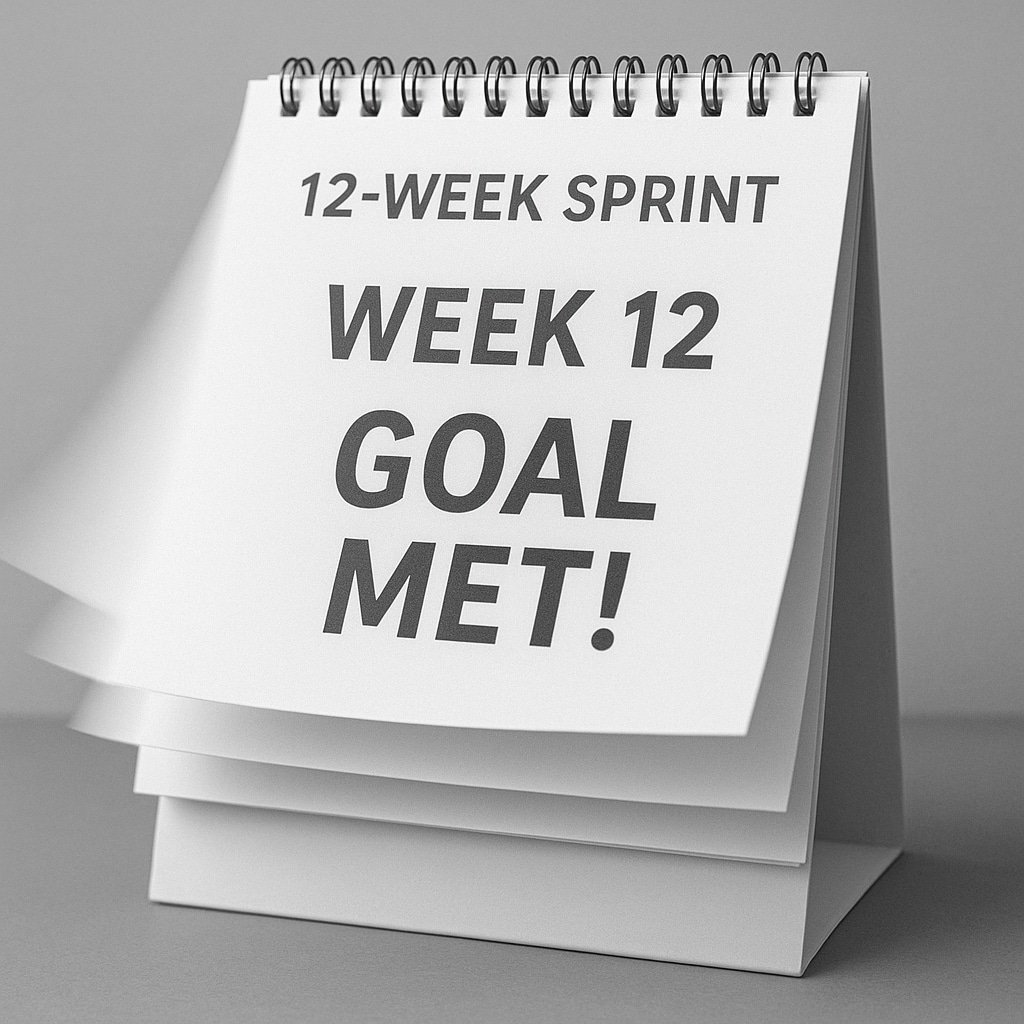
- 12-Week Year Sprints – agile, three-month execution cycles for rapid feedback
- Keystone Habits – catalytic routines that create positive ripple effects
When you capture all five pillars in one place, you create a document that both inspires and instructs—giving you motivation and maps.

2. Reverse Engineering with Covey & Agile Thinking
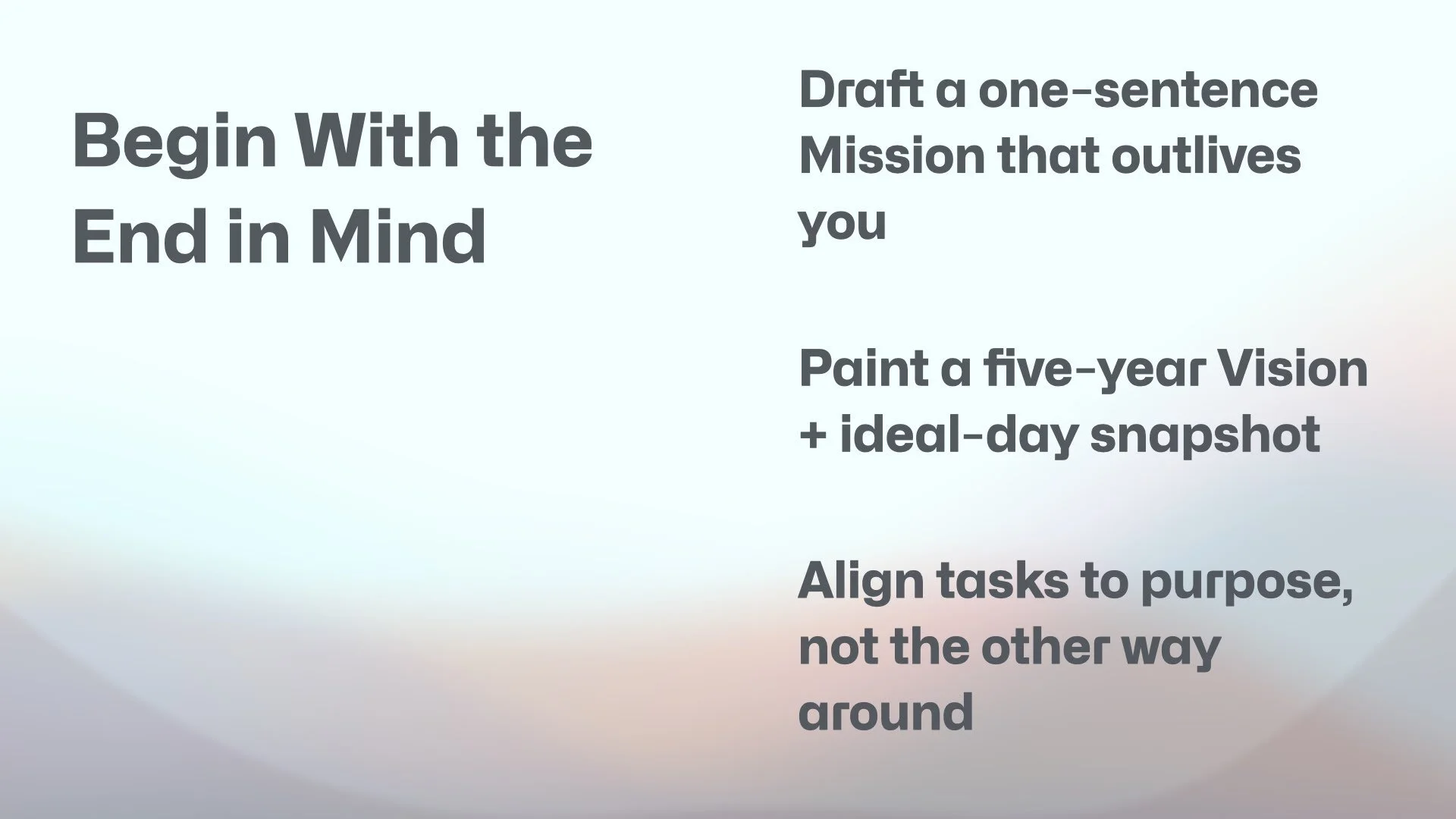
Stephen Covey’s Habit 2 (“Begin With the End in Mind”) reminds us every outcome is created twice: once mentally, once physically. Pair that with Agile’s iterative mindset and you get a powerful method:
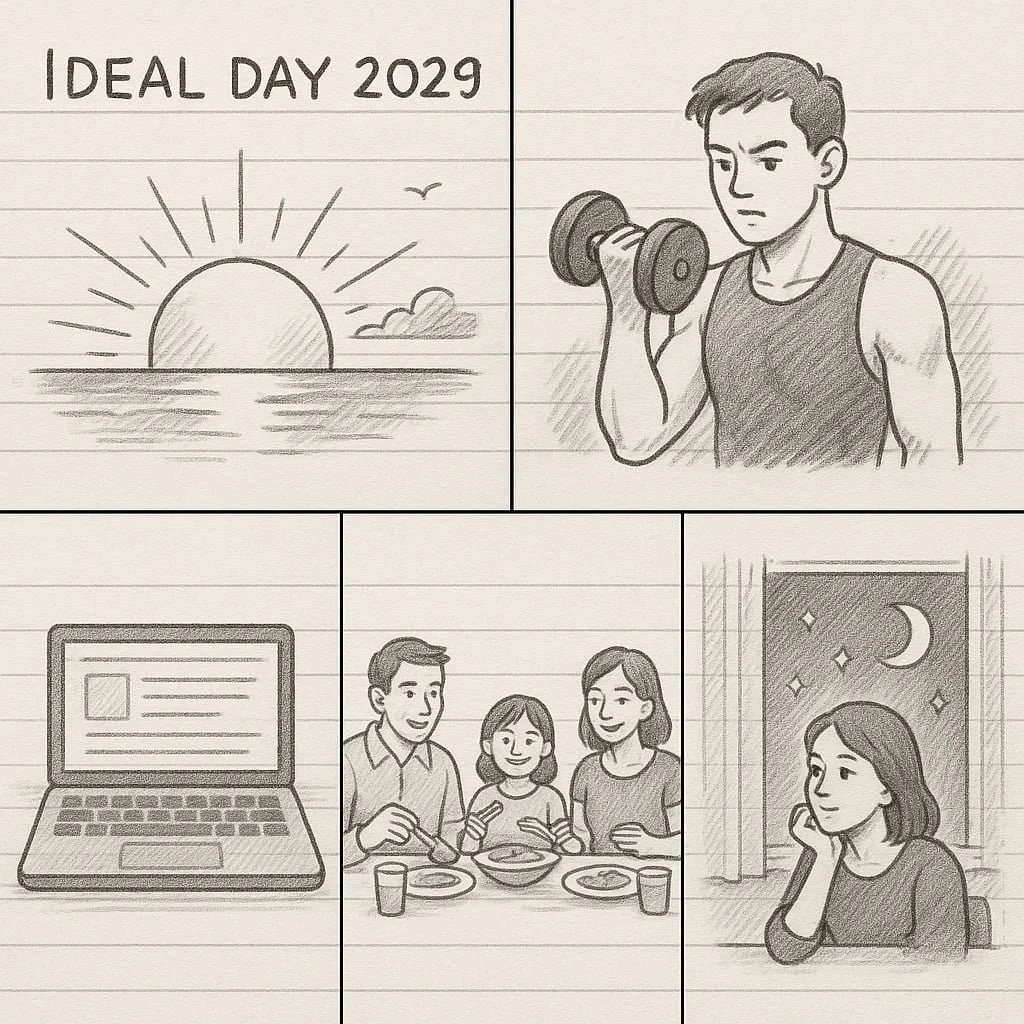
- Five-Year Vision – Write a vivid “ideal day” set in 2030.
- Three-Month Sprint – Reverse-engineer three tangible 12-week goals.
- Weekly Check-Ins – Run mini retrospectives: What moved the needle? What didn’t?
Quick Exercise: Open your planner and block a 60-minute “vision workshop” this week. Free-write the perfect dawn-to-dusk schedule of your future self, then highlight the verbs that spark energy.
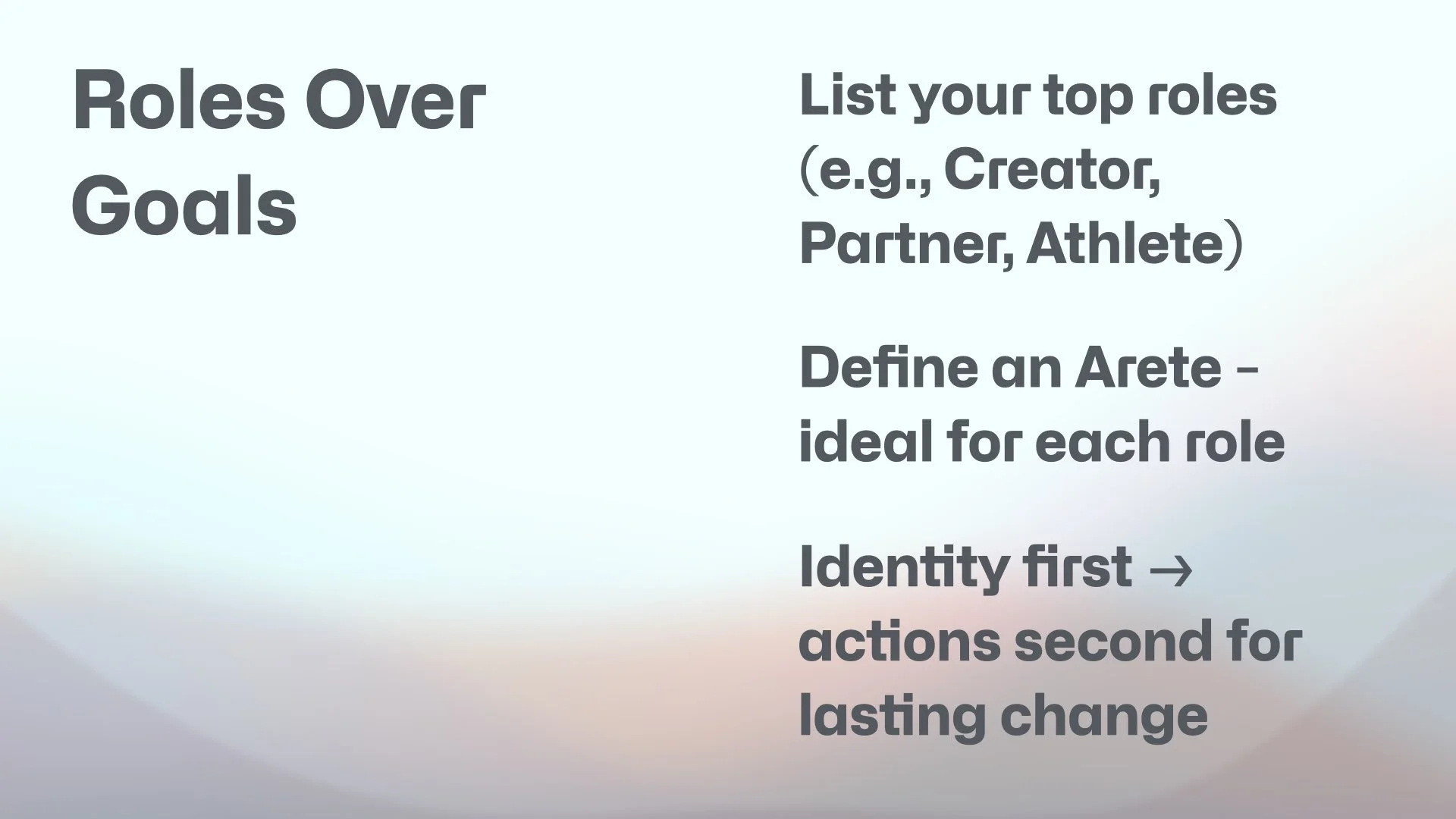
3. Roles > Goals: Identity Drives Consistency
Goals fatigue; roles endure. List every identity that truly matters—Therapist, Runner, Friend, Creative Entrepreneur. For each role, define:
- Arete Statement (your Greek-inspired ideal)
- Two Core Activities that deliver 80 % of the impact
- One Keystone Habit that supports both activities
Example:Runner → Arete: “Disciplined, joyful mover” → Activities: interval training & weekly long run → Keystone Habit: laying out gear each night.
4. Deep Work & Slow Productivity
Cal Newport’s Deep Work shows that four focused hours can outperform twelve distracted ones. Schedule daily 60–90-minute blocks where phones go in a drawer and only your highest-leverage activity remains.
Pair this with Newport’s newer Slow Productivity ethos: fewer projects, but finished with greater craftsmanship. The result? Less cognitive thrash, more meaningful progress.
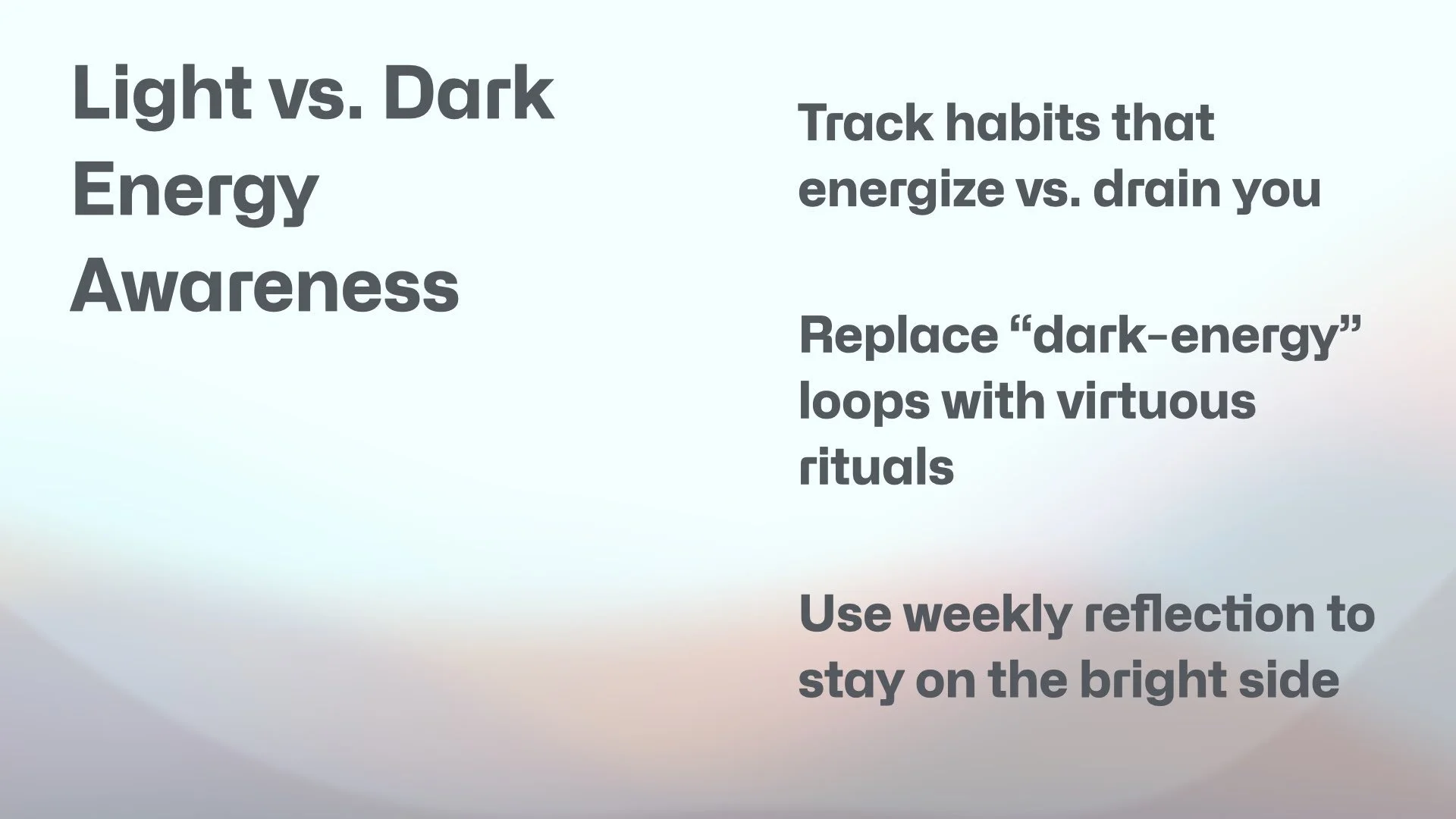
5. Audit Your Light & Dark Energy
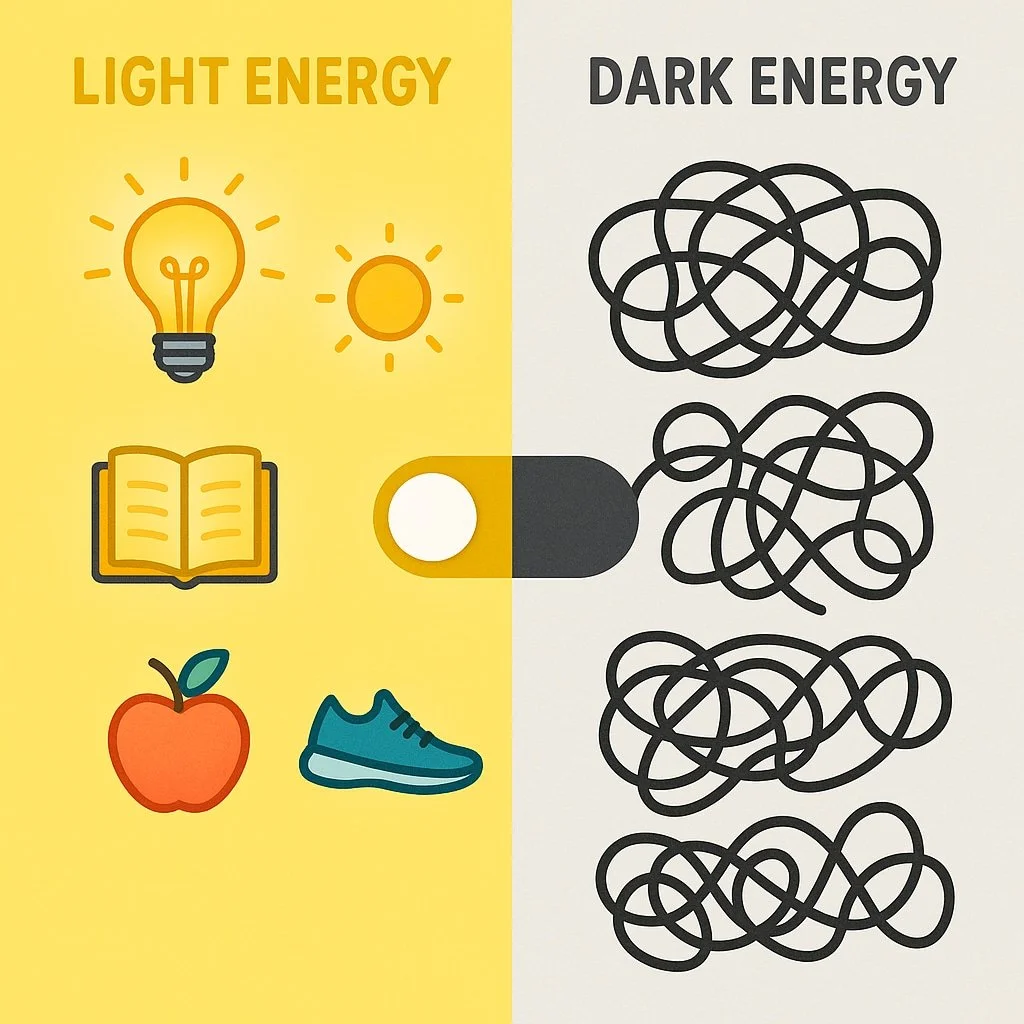
In therapy we often distinguish energizing habits (light) from draining patterns (dark). Draw two columns: Light Energy Sunrise journaling Weekly trail run Boundary scripts with family
Dark Energy Endless doom-scrolling Late-night sugar binges Saying “yes” when you mean “no”
Paint these pictures vividly—motivation sharpens when you feel the contrast.
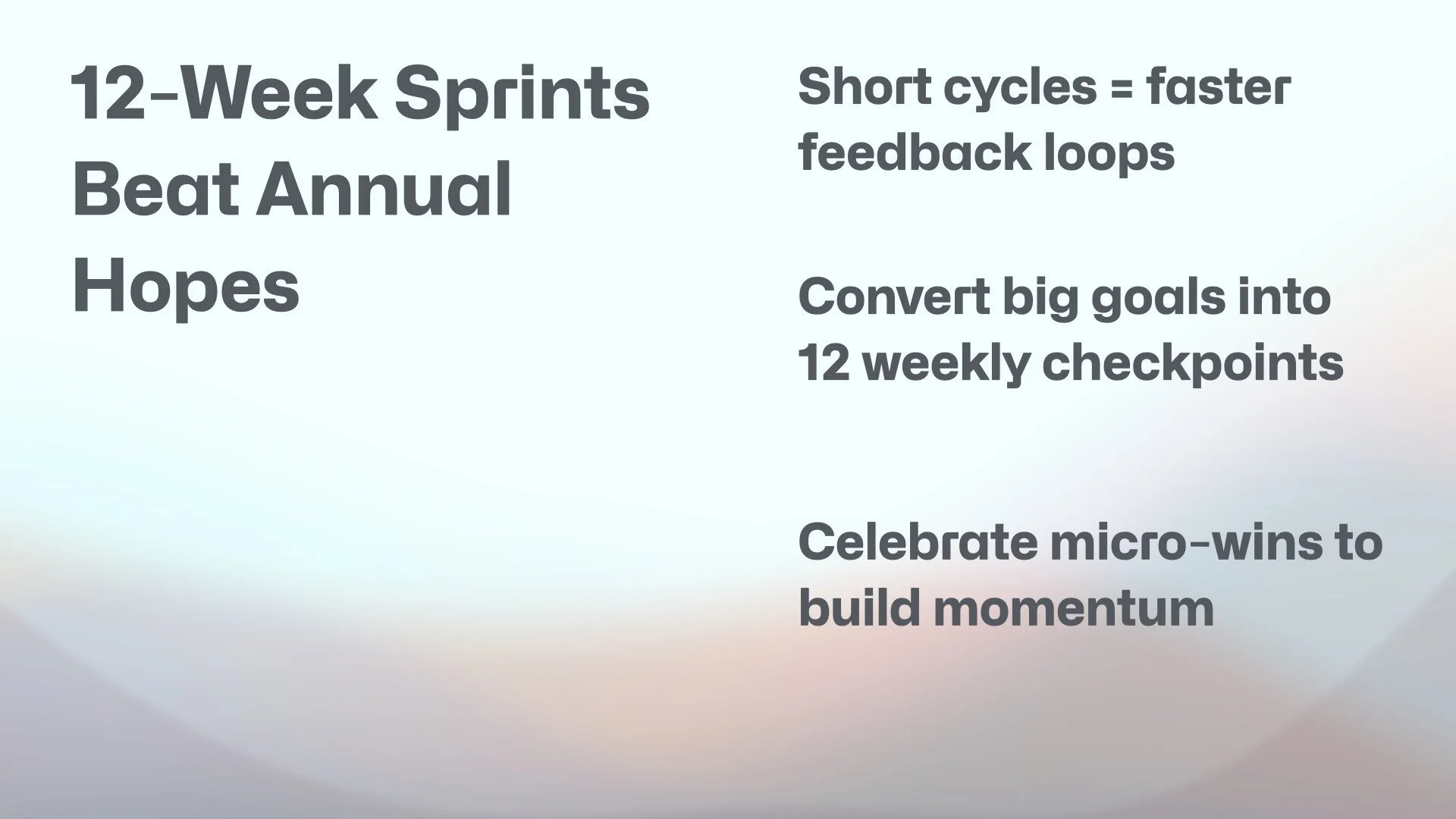
6. The 12-Week Year in Action
Brian P. Moran’s The 12-Week Year reframes a “year” as 84 days, injecting urgency without burnout. In my practice, clients who adopt this cadence report:
- Faster feedback loops (weekly scorecards)
- Higher focus (only 2–3 primary objectives)
- Greater resilience (a clean slate every quarter)

7. Golden-Mean Values: Aristotle Meets CBT
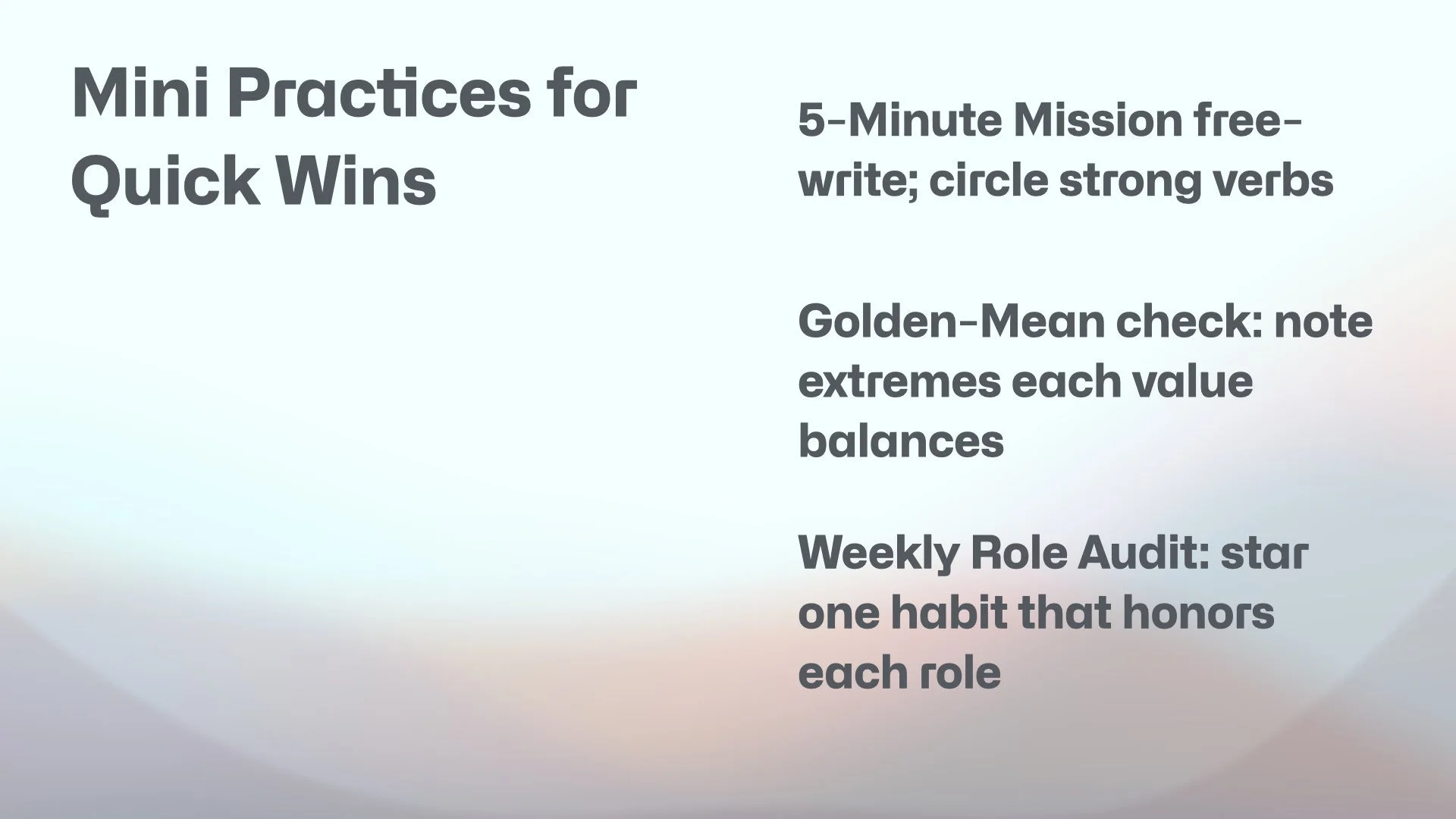
Aristotle’s Golden Mean frames virtue as the midpoint between two vices. Use a CBT-style worksheet to spot extremes:
- Recklessness ← Courage → Cowardice
- Indulgence ← Temperance → Deprivation
Define how the centered virtue looks and feels in real-life scenarios—your manifesto becomes instantly actionable.
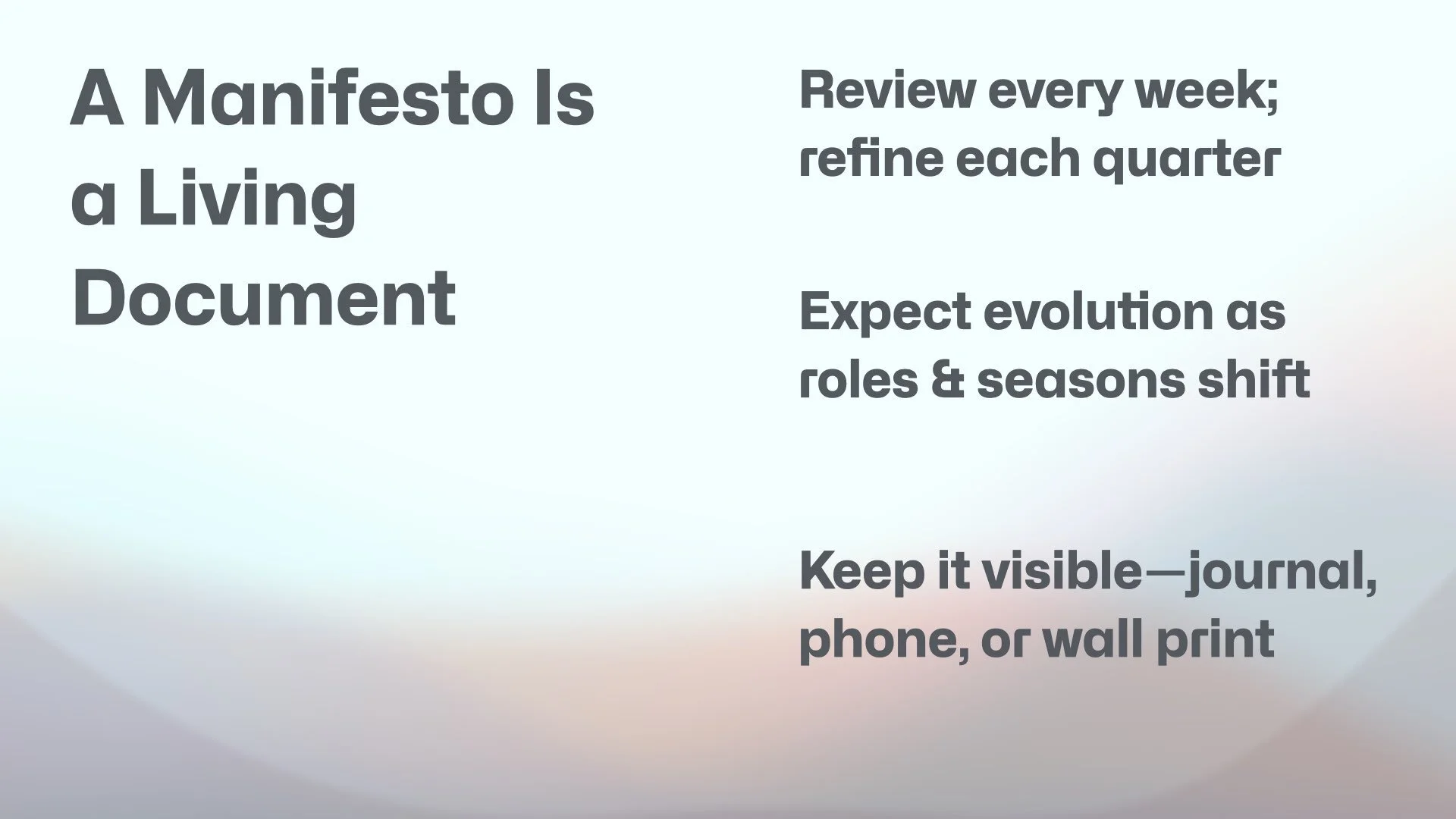
8. Review Rituals: Daily Micro, Quarterly Macro
- Daily (2 min) – Skim roles, values, top goal; visualize the next aligned action.
- Weekly (15 min) – Score progress, celebrate wins, adjust tactics.
- Quarterly (2 hrs) – Deep rewrite: update vision, archive completed goals, draft new sprints.
Pro-tip: Use OmniOutliner, Notion, or a plain Moleskine—whatever keeps friction low and reflection frequent.
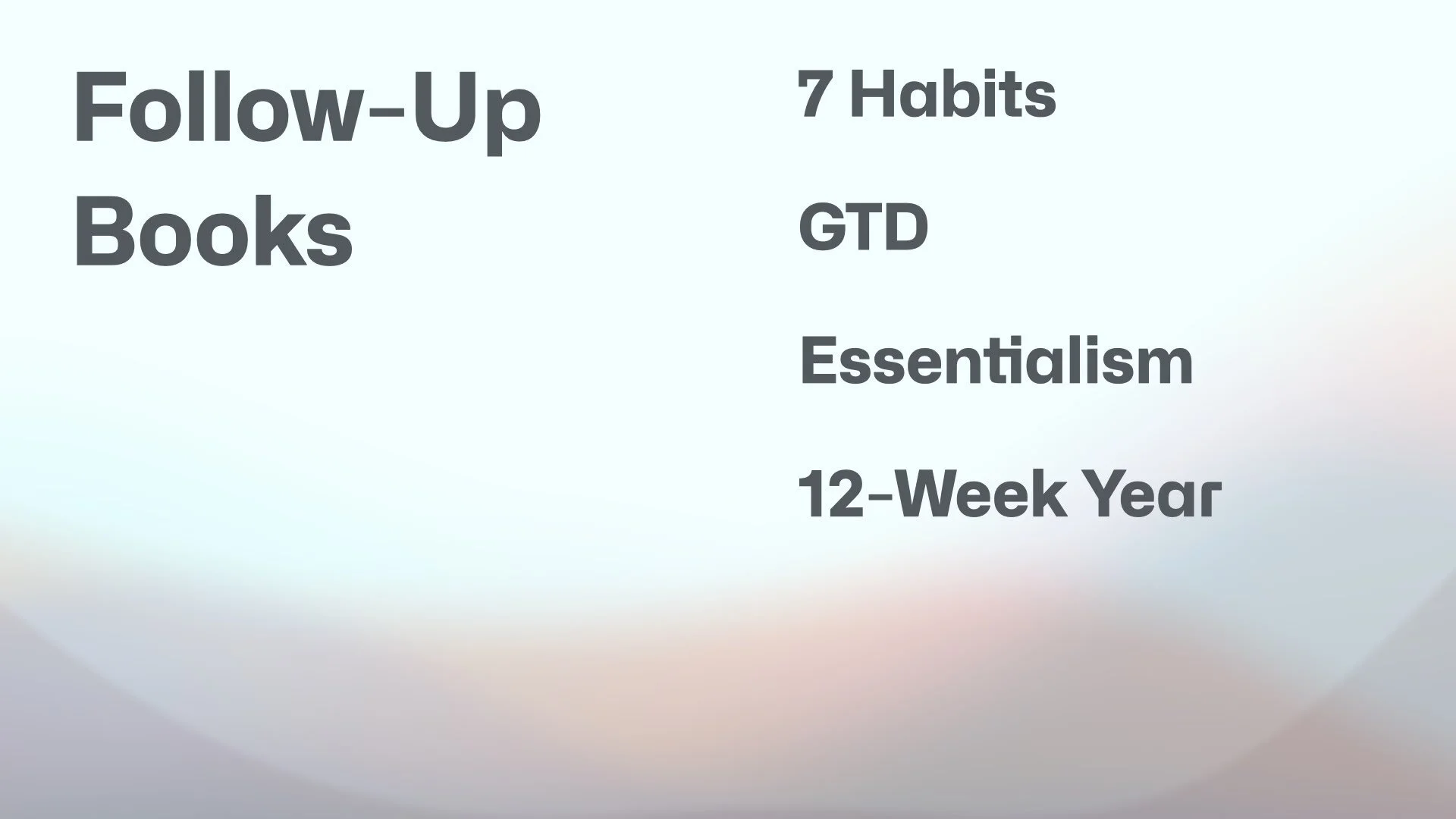
9. Therapist-Recommended Reading & Listening
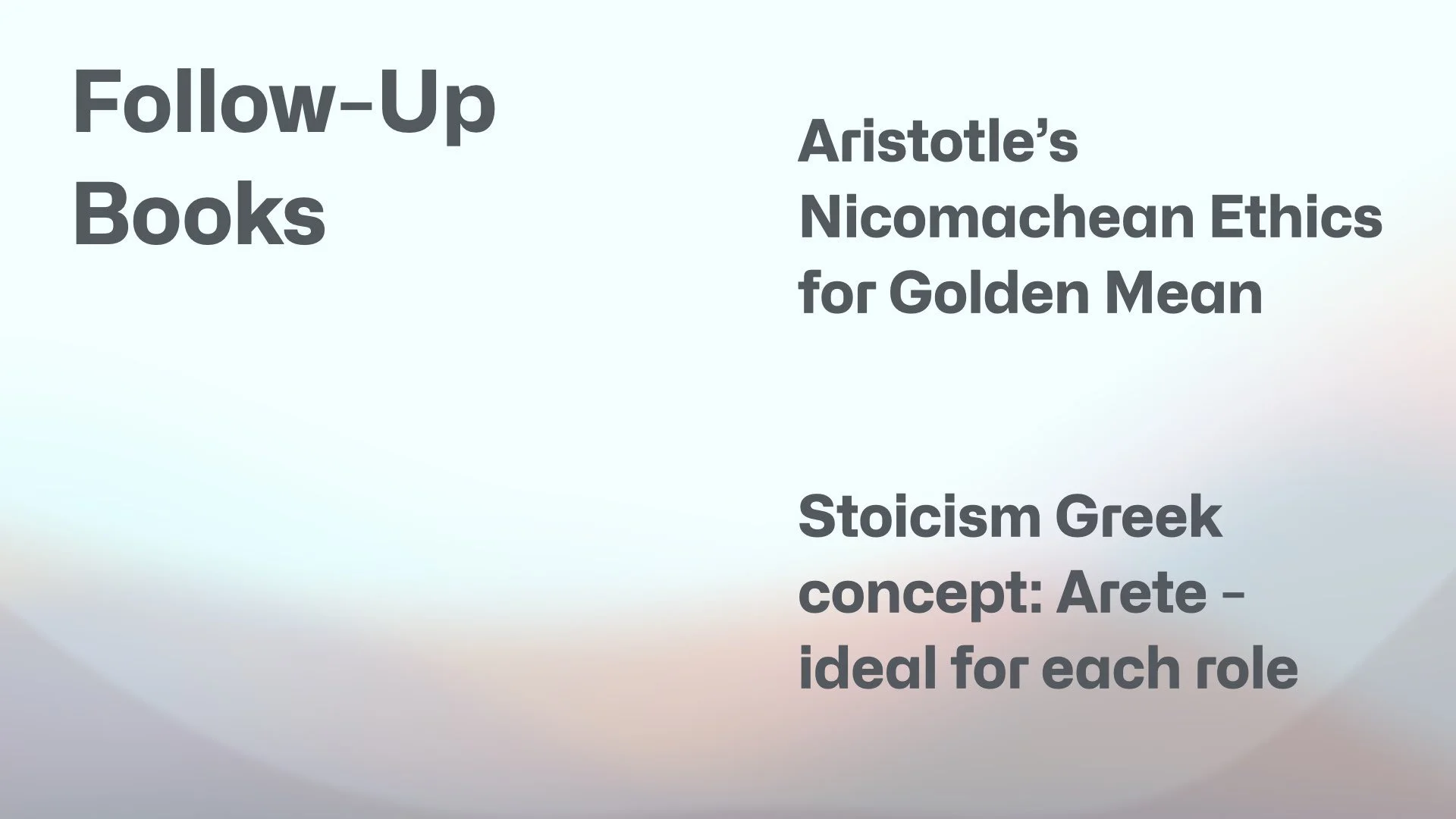
- The 7 Habits of Highly Effective People – Stephen Covey
- Getting Things Done – David Allen
- Essentialism – Greg McKeown
- Deep Work – Cal Newport
- The 12-Week Year – Brian P. Moran
- Bookworm Podcast – Bite-size, judgment-free productivity reviews
10. Next Steps: Draft, Live, Iterate
Ready to architect your own North-Star document? My Design Your Personal Manifesto Course delivers step-by-step video lessons, AI-powered prompts, and printable worksheets so you can finish your first draft in a weekend. Explore the course here →