Scott Peck's People of the Lie: Why Naming Evil Matters for Scapegoat Recovery
I recently listened to the audiobook of People of the Lie: The Hope for Healing Human Evil by M. Scott Peck, and it hit me in a way I wasn't expecting. Someone actually recommended it in the comments on my YouTube channel, and I'm glad they did. It's one of those books that doesn't shy away from what evil actually is — and if you've been on the receiving end of narcissistic abuse, especially within your family, that matters.
Who Is M. Scott Peck?
Scott Peck was a PhD psychiatrist who also wrote the very popular book The Road Less Traveled. He wrote People of the Lie in the early 1980s, and for its time, it was incredibly leading edge. He was doing something that most clinicians wouldn't dare — he was bridging psychology and spirituality, and making the case that the medical model alone isn't enough to understand what's happening in certain people.
The Problem with the Medical Model
In the scientific community, within abnormal psychology, the clinician doesn't typically approach the idea that there's evil. They'll look at neurosis, they'll look at sickness, but they tend to stay very narrow — very empirical, very left-brain. And Peck argued that this narrowness is actually a blind spot.
He said there's this rich tradition we've had of exploring the concept of evil, and science typically wants to solve the small aspects — the small evils — but won't face the larger ones. When you don't name this evil, especially for the child who's unaware, they will embody the sense that they're evil, that they are the bad person.
That's the clinical cost of avoiding the word.
What Makes Someone a "Person of the Lie"?
Peck explored this through his own clinical practice. He shares vignettes of patients — everyday people, not obvious villains. These are the bankers, the lawyers, the Sunday school teachers. People you would seemingly see as the average, normal person.

But there's this subtlety and this very covert nature to them.
What defines them is not their sins alone — we all have ways in which we fall short. The difference, according to Peck, is consistency and willful blindness. These individuals act superior. They believe themselves to be superior. And they refuse to look at the evil within themselves.
He makes a critical distinction: there's a difference between having a strong will — self-discipline, getting things done — and having this willful ignorance. The person of the lie has an un-submitted will. They don't face themselves. They don't reflect. And they certainly don't feel guilty.
Scapegoating as the Central Mechanism
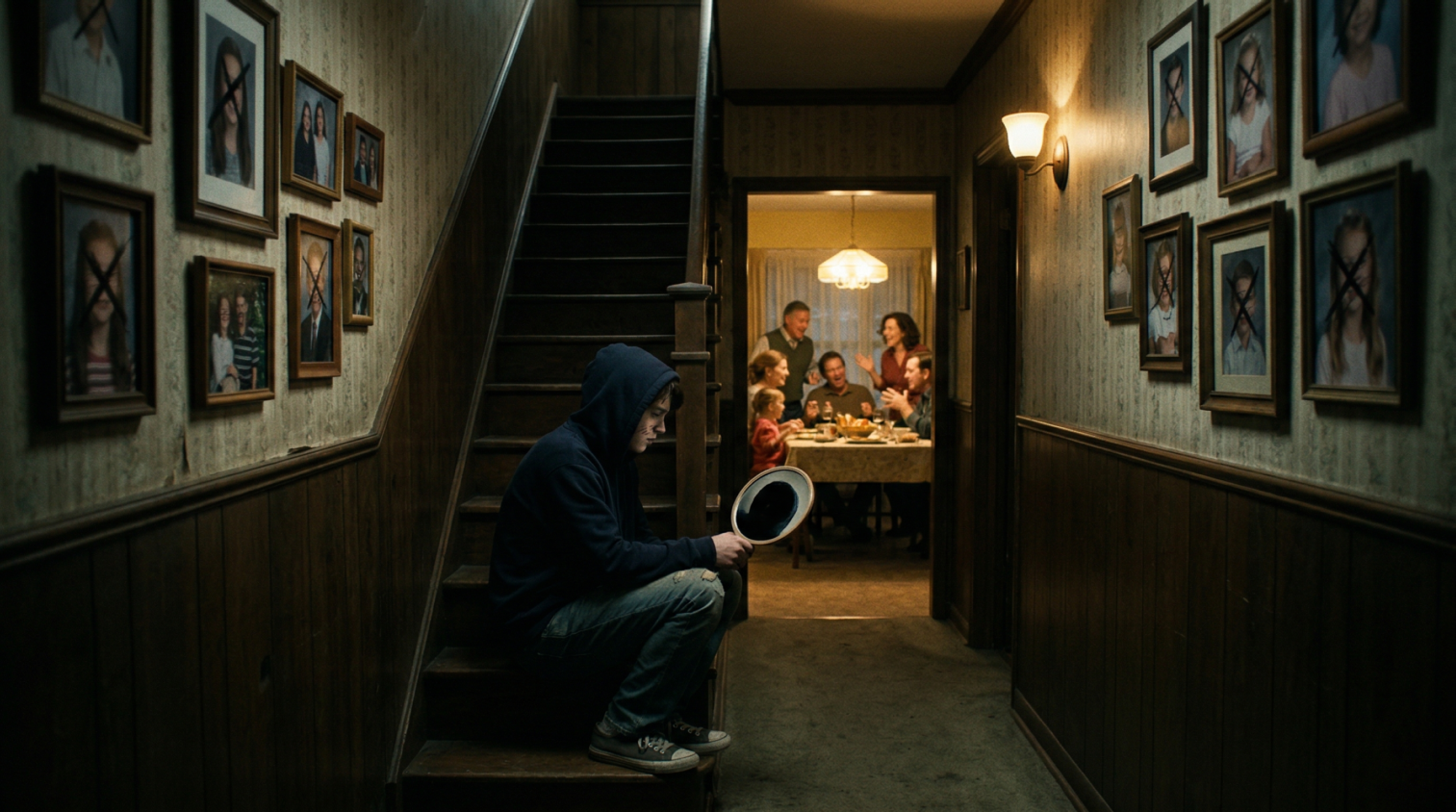
This is where the book really connected for me. Peck talks about scapegoating as a central aspect of these individuals. They externalize their problems. They project their darkness onto someone else — and that someone is often a child.
He has this one vignette about a 15-year-old boy who steals a car. When Peck examines the situation, he realizes this child had to become a criminal in his own mind because he couldn't accept that his parents had this cruelty. The child's psyche simply can't hold the reality that their parent is evil — survival depends on the attachment bond staying intact. So the child swallows the lie and concludes that they are the bad one while the parent stays above reproach.
That's the scapegoat dynamic laid out clearly, decades before most of us had language for it.
The Death Cult of the Narcissistic Family
I think about how Sam Vaknin talks about this — the narcissist creates a false self, this deity that the family essentially serves. You could think of the children as worshippers of the parent as this god-like figure. And according to Vaknin, it's like a death cult. The narcissist is this black hole that sucks identity — your nervous system, your relationships, your sense of self.
You have to die yourself and submit to the false self of the narcissist. And the family unit warps reality, creating distorted beliefs within the child self.
Peck saw the same thing decades earlier. The "People of the Lie" create what he called a "miniature sick society" where everyone under their dominion must submit to the false self or face total psychic annihilation.
Why Spirituality Matters in This Work
Here's what I appreciate about Peck, and it's why I connect with thinkers like Jordan Peterson as well — they don't shy away from saying that evil exists.
There's typically a taboo in psychotherapy around combining spirituality and psychology. If you're a materialistic scientist, very empirical, very left-brain, you'll tend to discount this more abstract thinking. But Peck argued that you need both: the medical model and what he called a "religious psychology."
I think that's why some people are interested in my work — I'm not afraid to embrace a level of spirituality alongside the clinical framework. When you're on the receiving end of these people, you come up against something — an entity, a force — that makes you question good and evil. And I think a healthy person always knows there's something beyond them. That's humility. The malignant narcissist sees themselves as God.
Evil Strikes Down Every Man's Heart
Peck is careful to say that before you go looking for evil outside of yourself, you need to look within. As Aleksandr Solzhenitsyn wrote, the line between good and evil runs through every human heart.

I'm a little cautious when I hear too much about the scapegoat being all good. I don't think it's always implied that way, but the psyche can easily fall into that victim mindset. Once you understand that we all have this capacity, but that we face it through self-discipline and self-examination — that's the distinction Peck is making. The narcissist doesn't face it. They won't see it. They scapegoat instead.
These are the master scapegoaters, as Peck calls them.
What This Means for Your Recovery
If you grew up in a narcissistic family system, you probably internalized the lie — the belief that something is fundamentally wrong with you. Peck's work gives language to what many of us feel but struggle to articulate: the problem was never you. It was the refusal of the people around you to face themselves.
Recovery starts with naming the evil — not to demonize, but to see clearly. As Peck argued, we cannot hope to heal what we are afraid to name.
And then the real work begins: facing your own shadow with honesty, developing self-discipline, and choosing to live in alignment with truth rather than the lie you were raised in.
Ready to start your recovery?
Download The Scapegoat & Narcissistic Abuse Recovery Healing Toolkit & Family Assessment — a free resource to help you name the patterns and begin the work.
The Ascent — my structured recovery course and community for scapegoat survivors — is currently open. Courses, community, and weekly live calls with me. Enrollment closes March 31st.
Blake Anderson, MSW, RSW
Registered Social Worker & Therapist, Toronto, Ontario
This post is for educational purposes only and does not constitute personalized therapy advice.
For guidance tailored to your individual circumstances, please consult a licensed therapist or qualified professional.