The Narcissistic Double Bind: Why You Feel Trapped (And How to Break Free)
Do you ever feel like you are damned if you do and damned if you don't?
You try to set a boundary and get labeled aggressive. You stay silent to keep the peace and get accused of being distant or uncaring. This is not just a difficult relationship — it is a Double Bind, a psychological no-win situation that leaves you paralyzed, confused, and stuck in chronic nervous system dysregulation.
Let's unpack the neuroscience and family systems theory behind why you feel trapped, and how to finally break the cycle.
The Neurobiology of Entrapment
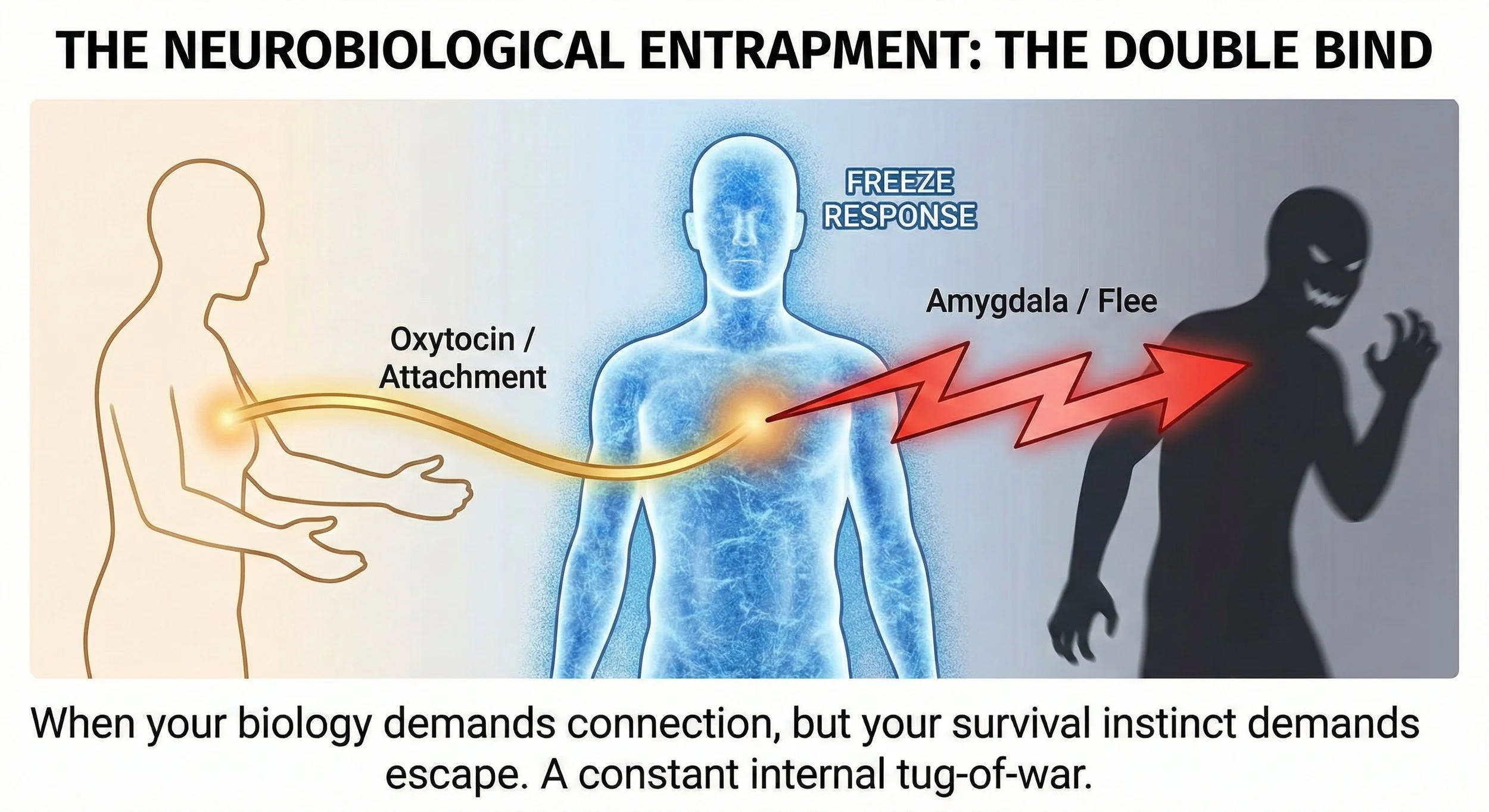
When we are children, our biology dictates that we must attach to our caregivers to survive. We are hardwired for connection through oxytocin. But when that caregiver is also a source of threat, invalidation, or abuse, our survival instinct — the amygdala — screams at us to flee.
This creates Neurobiological Entrapment. Your body is caught in a tug-of-war between the biological imperative to connect and the survival imperative to protect yourself. You cannot safely stay, but you cannot physically leave. This internal conflict often results in a freeze response, where you feel unable to act, speak, or think clearly.
The Conscience Gap: Neurosis vs. Character Disturbance
One of the hardest hurdles for the scapegoat to clear is the realization that not everyone thinks like you do.
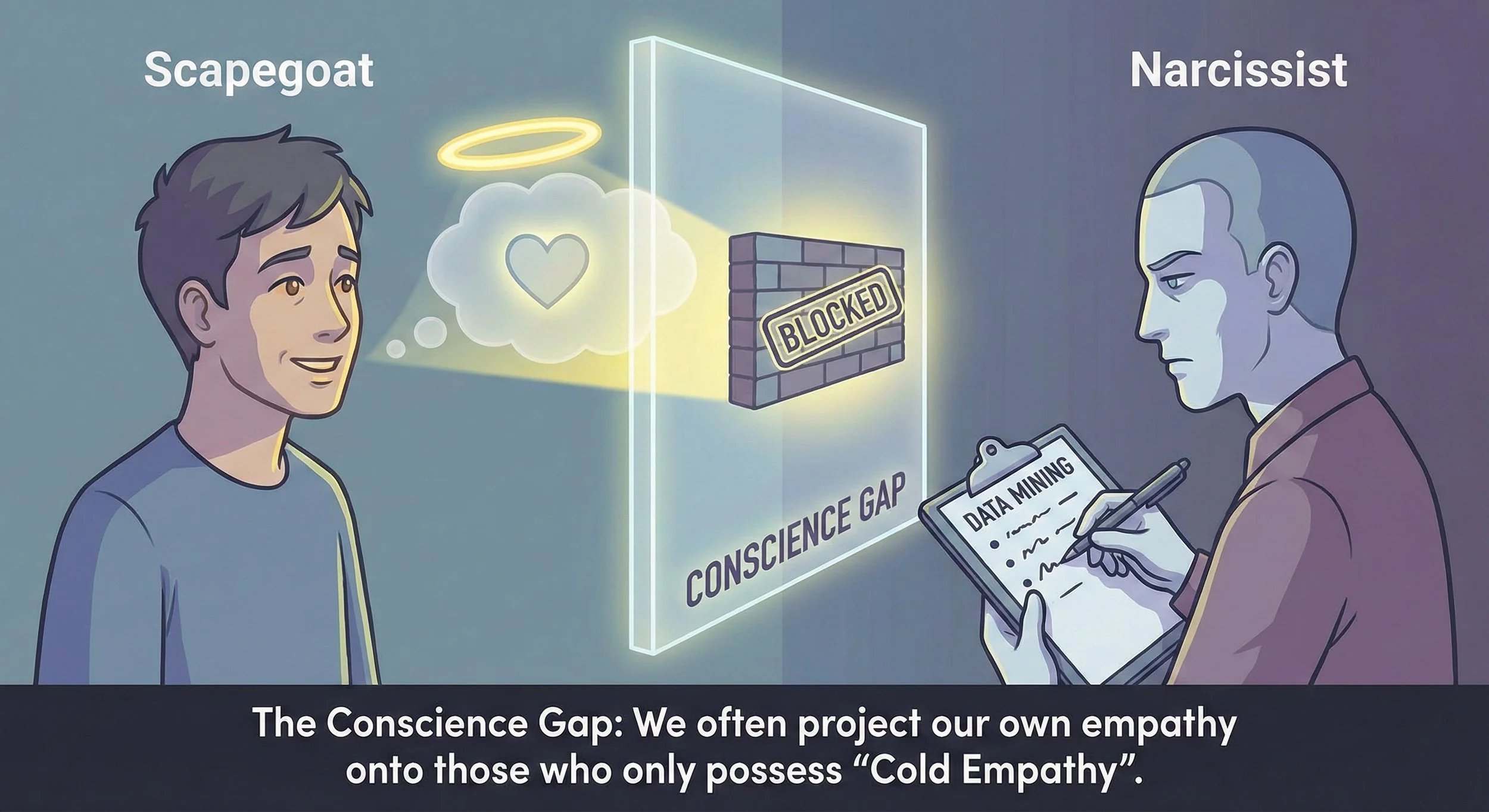
If you are reading this, you are likely a "neurotic" in the clinical sense — meaning you possess the ability to self-reflect, you struggle with guilt, and you internalize responsibility. When conflict arises, you ask, "What did I do wrong? How can I fix this?"
The narcissist, however, operates with Character Disturbance. As Dr. George Simon describes, these individuals lack the same capacity for self-reflection. They do not internalize blame; they externalize it.
We often project our own conscience onto them, assuming they must feel bad about hurting us. But the reality is often Cold Empathy — they understand intellectually that you are hurt, but they do not feel the emotional weight of it. They use that understanding not to repair the relationship, but to manipulate the outcome.
The "Snapshot": Why You Feel Invisible
Have you ever felt that your parent isn't interacting with you, but rather with a version of you that doesn't exist?
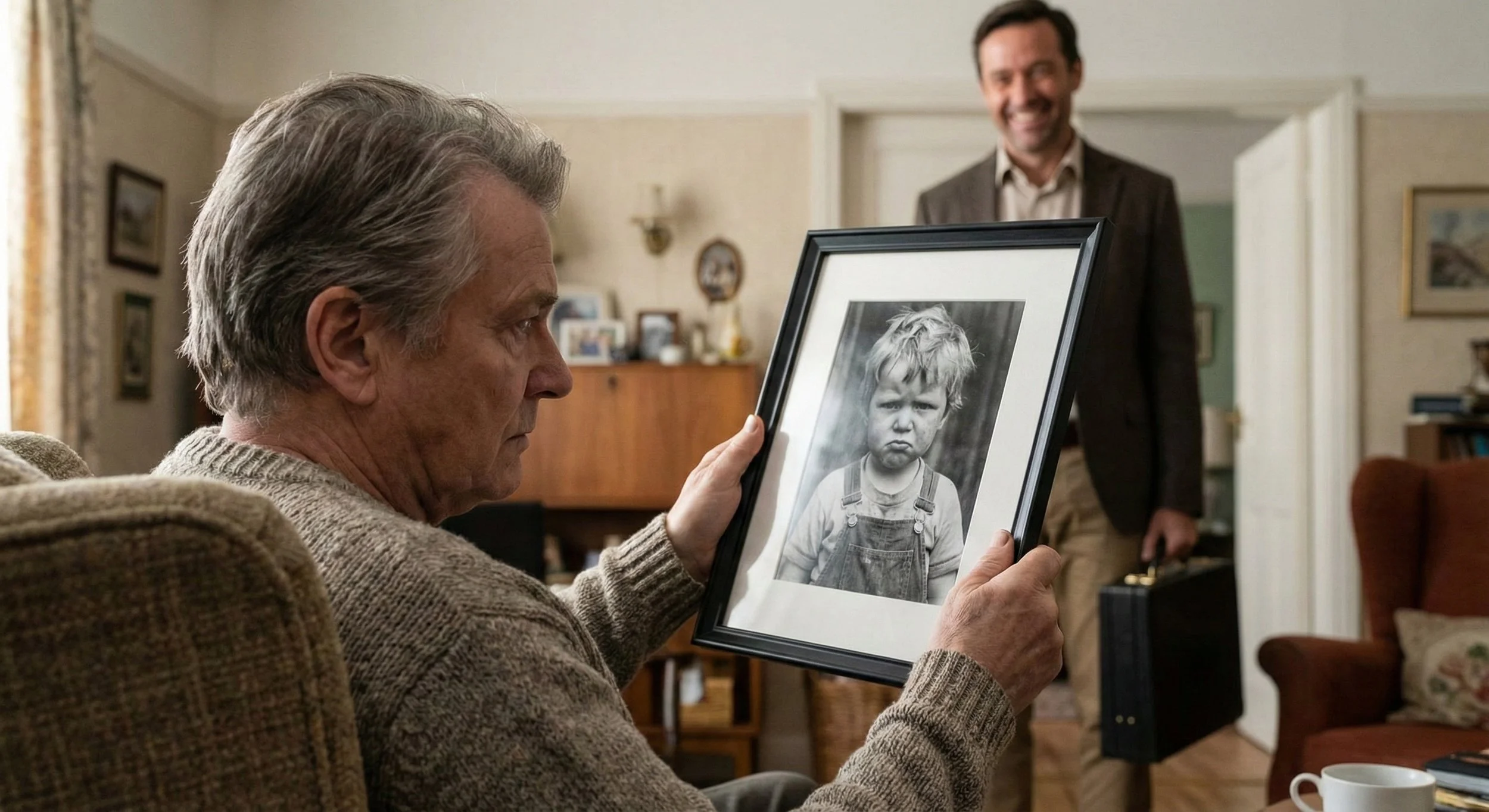
Sam Vaknin describes this as Snapshotting. The narcissist takes a mental "snapshot" of you — usually at a moment of vulnerability, weakness, or rebellion — and internalizes it as a static object. They interact with this Introject (internal image), not with your evolving, living reality.
This is why you can achieve great success, grow, and change, yet they still treat you like the rebellious teenager or the incompetent child. They are not relating to your Authentic Self; they are managing their relationship with a "Role Self" they have assigned to you.
For more on snapshotting and the narcissist's internal world, see Sam Vaknin's Malignant Self-Love on my Reading List.
Breaking the Double Bind
The way out of the double bind is not to "win" the argument — because the game is rigged — but to stop playing entirely.
Stop JADE-ing. Do not Justify, Argue, Defend, or Explain. This only fuels their need for narcissistic supply and gives them more data to weaponize.
Observe, Don't Absorb. As Ross Rosenberg suggests, view the dynamic like a scientist observing a petri dish. Detach from the emotional hook.
Retire the "Role Self." Grieve the fantasy that if you just explain yourself clearly enough, they will finally "get it." They won't. Step into your Authentic Self, defined by your values, not their projections.
Radical Acceptance
Healing requires Radical Acceptance — accepting that the family system is an emotional unit dedicated to its own homeostasis, not your well-being.
You are not crazy. You are not "bad." You are a healthy person reacting to an unhealthy system.
Map Your Family Dynamics and Reclaim Your Nervous System
Take the free Four-Quadrant Family Origins Assessment to understand how your family system shaped your thoughts, emotions, body, and relationships. You'll also get the Healing & Growth Toolkit — practical worksheets and strategies from 14+ years of clinical work.
Ready for deeper support? Join the Sovereign Scapegoats community for guided recovery alongside others who understand, or book a free 15-minute consult to explore 1:1 therapy (Ontario) or coaching (international).