The Family System and the Cost of Individuation: When Becoming a Self Becomes a Threat
If you grew up in a family where every special occasion seemed to turn into the thing it should never have been about — where a wedding became a referendum on the apex parent's mood, where a graduation produced a quiet sabotage you couldn't quite name, where every truth-telling attempt collapsed into "look how upset you've made your mother" — this post is for you.
The therapeutic literature has a great deal to say about the families I am about to describe, and most of it gets reduced, in the trade-book and YouTube ecosystems, to labels. Narcissist. Golden child. Scapegoat. The labels are useful. They are also a trap. As soon as the conversation is about who-is-what, the conversation is no longer about the system that produced the casting in the first place.
This post stays at the level of the system. It is the long-form companion to my latest video, and it draws on Murray Bowen, Lyman Wynne, Salvador Minuchin, Jennifer Freyd, André Green, Robert Firestone, Sam Vaknin, Edwin Friedman, and Carl Jung — clinicians who, across very different vocabularies, all describe the same structural fact. Becoming a self disturbs a family that was organized around you not being one.
The Family as Emotional Unit
The frame begins with Murray Bowen, whose family-systems theory treats the family as a single emotional organism whose members co-regulate, share anxiety, and stabilize each other through patterned position-taking. Family Therapy in Clinical Practice (1978) is the canonical text. The healthy version of the organism breathes — the family adapts, the children individuate, the parents soften, the structure updates as the people inside it grow. The version this post is about does not breathe. It holds.
When the parent — or the parent couple — is organized around image, control, and the management of a fragile self, equilibrium gets arranged around the parent's fragility, the roles harden, the hierarchy becomes treated as the natural order of things, and any movement that would force the system to update gets read as a threat. Lindsay Gibson's Adult Children of Emotionally Immature Parents (2015) is the trade-book extension into this dynamic. Salvador Minuchin's Families and Family Therapy (1974) gives the structural-therapy version. Sam Vaknin's Malignant Self-Love (2003) gives the most uncompromising clinical description of the apex parent's psychic structure.
Individuation as the Disturbance
Carl Jung saw individuation as the central project of the second half of life — the slow becoming of the actual self underneath the persona the family of origin and surrounding culture installed early. Bowen called the same project differentiation of self. Both writers, in different vocabularies, predict the same thing. The system will react.
The reaction is not always loud. In fact, in the families I am describing, it is usually quiet, distributed, and deniable. The parent does not say I cannot tolerate that you are becoming a person. The parent does not have language for it. The fragility is too thin for that kind of self-knowledge. What the system does instead is produce a set of patterns that reliably bring you back into the role you were assigned.
This is where the labels get useful again — not as identity tags, but as descriptions of positions you can step out of.
Pseudo-Mutuality and Pseudo-Hostility
The single most clinically useful pair of concepts for families like this comes from Lyman Wynne and his colleagues — Irving Ryckoff, Juliana Day, and Stanley Hirsch — in their 1958 paper Pseudo-Mutuality in the Family Relations of Schizophrenics, published in the journal Psychiatry.
Pseudo-mutuality is the family's surface harmony. The polished holiday table. The "we are very close" line that gets repeated to outsiders. Photos of everyone smiling. A sense that the family is unusually tight, unusually loyal, unusually supportive. Underneath it, the actual differentiated relating that mutuality would require — being known, being met, being loved as you are — is missing. Mutuality is performed. Closeness is staged.
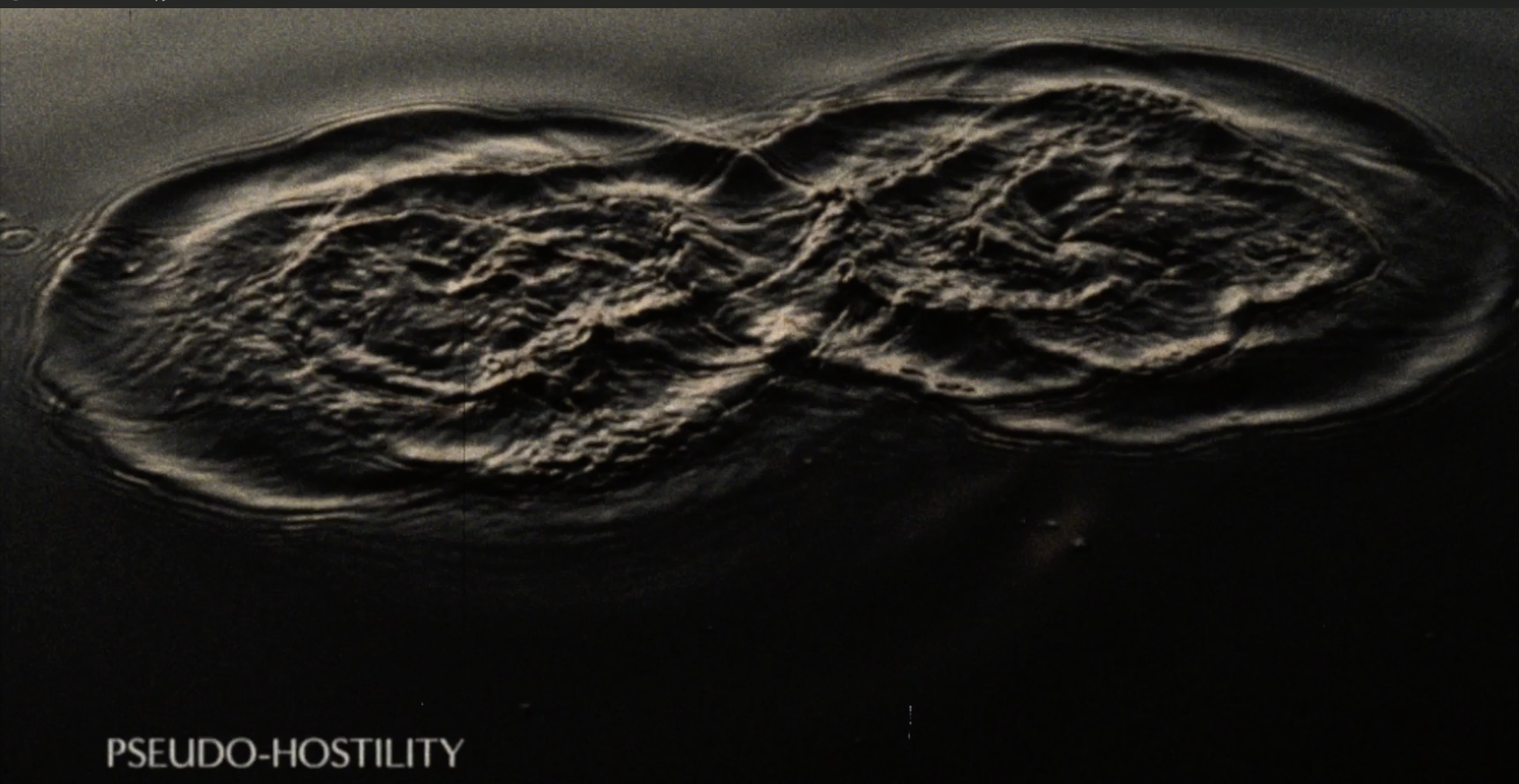
Pseudo-hostility is the inverse mask. The constant low-grade bickering, the petty conflict, the dramatic flare-ups that resolve nothing and recur predictably. People in this kind of family will fight about the seating chart, the holiday menu, the missed phone call, the perceived snub at the wedding. They will not fight about the parent's drinking, the favoritism, the sibling who has been mocking your career for fifteen years.
Wynne's clinical observation, fifty years before Lindsay Gibson started writing trade books, was that this combination — manufactured closeness plus manufactured friction — is the signature of a family that cannot tolerate authentic differentiation in any of its members. The two patterns serve the same function. They protect the system from the real conversation. When you, the truth-teller, finally name something real, you are not interrupting the family's harmony. You are interrupting the family's performance of harmony, and the system reacts as if you have set the house on fire.
The Foot Soldier
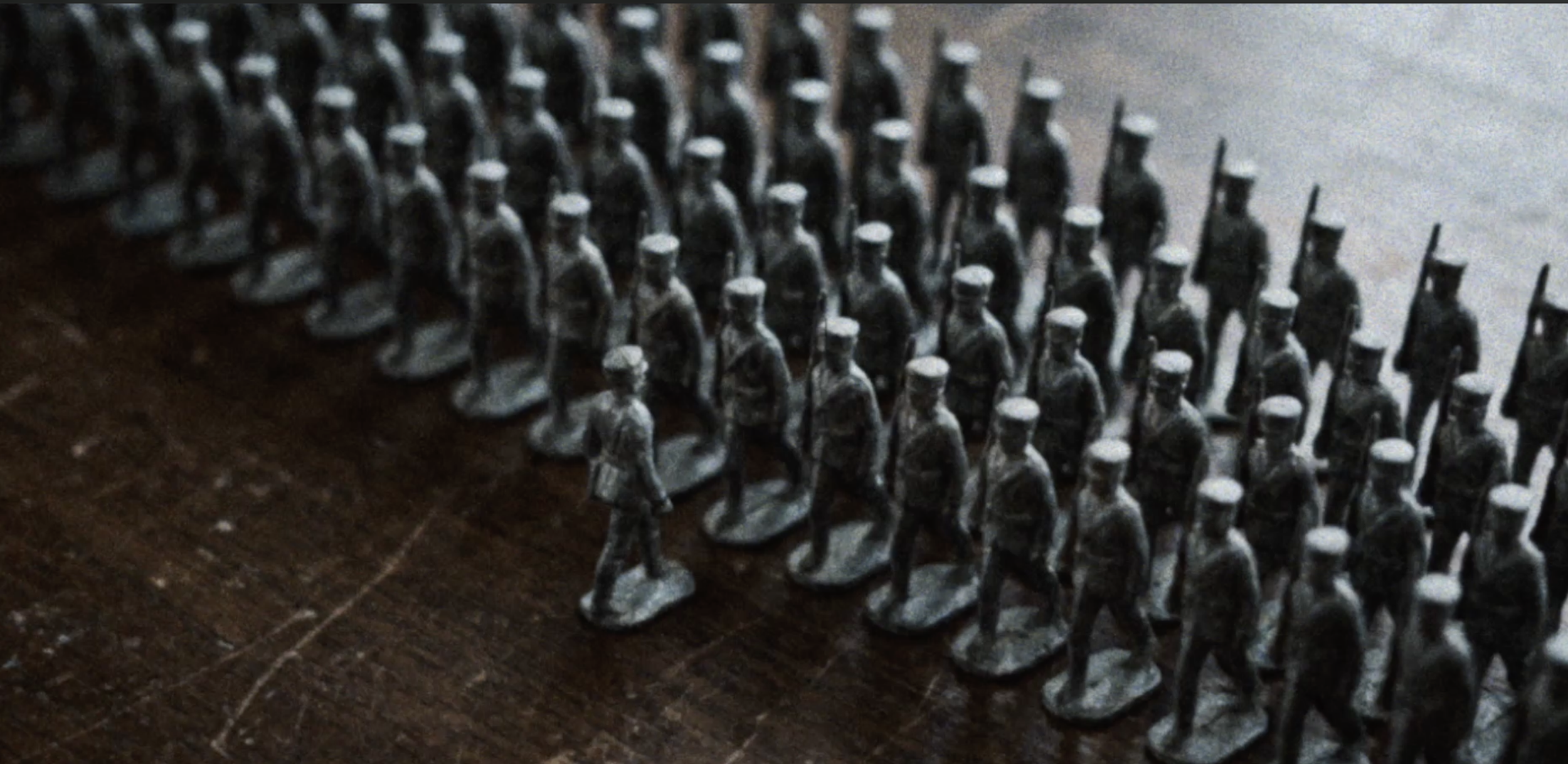
In any family that runs on this kind of rigidity, there is usually one child whose loyalty to the apex parent is total. Not all the time. Sometimes it shifts. But there is a structural slot that needs to be filled — the slot of the enforcer.
Salvador Minuchin describes the structurally analogous slot in Families and Family Therapy (1974) as the parental child — the parent who has crossed a generational boundary and turned a child into a co-parent against their siblings. Stephen Karpman's drama-triangle vocabulary catches the same figure as a Rescuer who turns Persecutor the moment the scapegoat refuses to be a Victim.
Here is the part that confuses outsiders. The foot soldier often presents as the family hero. They believe they are protecting the family. They believe they are reasonable, balanced, the only one keeping the peace. They believe the scapegoat is the one destabilizing things. From the inside, they cannot easily see that they have been recruited.
Whether the apex parent gives an explicit instruction — a wink, a whisper, a "talk some sense into your sister" — or whether the recruitment is purely emotional and atmospheric, the result is the same. The foot soldier moves on the parent's behalf. The parent stays clean. Plausible deniability is preserved at the apex. The work of suppressing the truth-teller is delegated.
If you are the scapegoat in this dynamic, the hardest thing to hold is that the sibling coming at you is also a casualty of the same system. Understanding is not the same as access. You can see the structure, refuse to take the bait, and still keep your distance.
DARVO
When the truth-teller speaks, the family rarely engages with the substance. What it does instead has been described carefully in the trauma literature.
Jennifer Freyd's term is DARVO — Deny, Attack, Reverse Victim and Offender. The original event is denied. The truth-teller is attacked for naming it. And then, in the move that is the most disorienting of the three, the apex parent and the foot soldiers reverse the positions — the original wrong is dropped from the conversation entirely, and you become the aggressor in the new story. Look how upset you are. Look what you've done to your mother. Look at the disruption you've caused.
Karpman's drama triangle catches the same flip in different vocabulary — the rapid switching of roles between Persecutor, Victim, and Rescuer that keeps the actual material from ever being processed. The substance is gone. The story now is your tone, your timing, your audacity, your "issues."
If you have been on the receiving end of this and walked away questioning whether you were the unreasonable one — that questioning is the system working as designed. The aim of DARVO is not to win an argument. The aim is to make the original truth unspeakable.
The Reveal: Weddings, Births, Funerals
This is the pattern that, in my experience, finally lets clients see the system. The kind of family I am describing tends to reveal itself at the family events that should be the safest.
Weddings. The birth of a child. A graduation. A funeral. The events that, in a healthy system, are pure occasions of celebration or grief — the family closing ranks around the person at the centre of the moment.
In a rigid family these events become destabilizing precisely because they require the rigid family to let someone else be the centre. The bride. The groom. The new parent. The graduate. The system has been organized for years around the apex parent being the gravitational pull. A wedding moves the gravitational pull, even briefly, to the next generation.
The system cannot tolerate the move. So one of two things happens.
The apex parent becomes visibly distressed — sullen, weeping at moments that read as inappropriate, withdrawn, suddenly ill, dramatically disappointed — and the rest of the family rearranges itself around her or his emotional weather instead of around the bride or groom.
Or the apex parent stages a smaller, quieter act of sabotage — the comment in the receiving line, the toast that is somehow about her or him, the pointed seating arrangement, the reveal of a long-suppressed grievance the day before.
You, watching this, see the structure suddenly in high relief. The years of pseudo-mutuality concentrate into a single afternoon and you cannot un-see it. The new partner — the fiancée, the spouse — sees it for the first time, and now there is a witness. The foot soldier scrambles to absorb the spike of system anxiety. And often, the marriage of the son or daughter to a partner outside the system is the moment the apex parent realises the long emotional fusion is being interrupted, which produces the very behaviour I just described.
A wedding does not create the dysfunction. A wedding is the lens that finally lets you see it.
Mother–Son and Father–Daughter Fusion
A specific note, because it matters here.
Sometimes the apex parent is a mother who has been emotionally fused with a son — particularly if a father has died, or distanced himself, or never really been present. The son has been positioned as a pseudo-partner to the mother — not sexually, not literally, but emotionally and structurally. He provides the regulation, the companionship, the audience, that the mother could not get from a peer. Patricia Love's The Emotional Incest Syndrome (1990) and Kenneth Adams' Silently Seduced (1991) describe this dynamic carefully without sensationalising it.
When that son marries, the structural threat to the mother is not the wedding. It is that her primary regulating attachment is being reorganized. The bride is not a person to her. The bride is a structural intruder.
The mirror version exists between fathers and daughters.
André Green's classic paper on the dead mother complex — and the same configuration appears with fathers, despite the name — describes the chronically unavailable parent whose presence is occupied by depression or fixation, and the child who organizes a life around trying to bring that parent back online. When that child individuates, the dead-parent complex turns hostile, because the project of reviving the parent has been the child's secret organizing principle for decades. Individuation requires giving up the project.
Robert Firestone'sfantasy bond describes the same emotional knot from another angle — the unconscious bond between parent and child that simulates the safety neither can actually provide. The bond is made of fantasy because the real connection was never available. Individuation breaks the fantasy. The system reacts as if it has been wounded.
The Cost in the Body
Suppression is metabolised.
Stephen Porges' polyvagal theory and Bessel van der Kolk's The Body Keeps the Score (2014) describe what happens when chronic relational threat cannot be either fought or fled. The system goes into long-term physiological accommodation. The cost shows up as fatigue, vague illness, panic, dissociation, hypervigilance, the body holding what the family will not name.
Ivan Boszormenyi-Nagy'sInvisible Loyalties (1973) names the parentified dimension of this position — the way children take on emotional, ethical, and instrumental debts that were never theirs in service of family stability. The scapegoat has typically watered down, masked, censored, and chameleon-ed for years. The body keeps that score, and the project of recovery includes letting the body finally put the score down.
When You Speak, the System Doubles Down
This is the part that hurts the most for clients who have started to speak.
You imagine, hopefully, that if you can find the right words, the family will hear it. That perhaps a courageous conversation will land. That at sixty, at seventy, the apex parent will soften in some small way and acknowledge what you have always seen.
In the kind of system I am describing, the apex parent typically doubles down instead.
Sam Vaknin's phrase for the pathological narcissistic structure is anti-reality and anti-death — a self organized around denying anything that would humble it, including its own mortality. The false self does not soften with age. The crown gets gripped harder. Edwin Friedman's Generation to Generation (1985) has the line I keep coming back to. The colossal misunderstanding of our time is the assumption that insight will work with people who are unmotivated to change.
So you may be cut out of the will. You may be smeared. You may be told you are the cause of the disruption. And the most painful version of this, often, is that the rest of the family will agree — at least publicly. Because for them, agreeing with the apex is how the system has always been kept calm.
What Comes After the Apex Parent Dies
A lot of clients ask: what happens when the head narcissist dies? They imagine peace. Sometimes it comes. Often it doesn't, at least not at first.
Bowen's multigenerational transmission process describes the way patterns of differentiation, fusion, anxiety, and projection are passed between generations — not as conscious teaching but as the emotional inheritance of the system. The pattern does not end with the death of the apex parent. It transmits.
The most fused sibling — usually the foot soldier, occasionally the golden child — inherits the apex slot. They do not always step into it consciously. The system is what is doing the casting. Your nieces and nephews grow up inside a story in which you have been written as the family villain, or simply written out. This is part of the cost of sovereignty. The next generation may not know you. They may know a version of you that justifies the family's choices.
I name it because the cost is real and worth grieving. And because grieving it is part of what frees you to live inside what you actually have rather than what you were told you should have.
Sovereignty as the Outcome
I do not end on healing-as-journey. I end on something more concrete.
Sovereignty, in my vocabulary, is the practice of building a life whose validity does not require the family of origin's recognition. Bowen would call this differentiation. Søren Kierkegaard, in The Sickness unto Death (1849), would call it the courage to be the self one already is. Viktor Frankl, in Man's Search for Meaning (1946), would call it the construction of meaning under conditions of suffering. Carl Jung, across a lifetime of writing, would call it individuation — the integration of shadow and self, with the family system finally seen as the outer condition the work has had to take place inside, rather than the inner reality the work was about.
What sovereignty looks like in practice is mostly small.
You stop arguing with people who are not listening. You stop performing the role that was never yours. You stop showing up to the reveal hoping the system will, this time, surprise you. You stop carrying the system's anxiety in your body. You build a life — friendships of equals, work that uses your real gifts, a relationship with your own perception that does not require the parent's signature.
The system stays brittle. That is its problem. You stop being brittle with it. That is yours.
Working With This
If any of this lands, the Integral Family Scapegoating Assessment (IFSA) is the place to start — an 80-item structured read on the kind of system you came out of, with a clinical workbook drawing on Bowen, IFS, and Jungian frameworks. If you want to talk through what your score means, or work through any of this in a more focused way, you can book a 15-minute consult. And the Sovereign Scapegoats community is where this work continues — weekly calls, structured course material, and other people speaking the language of Bowen, IFS, polyvagal, the four quadrants.
The system is a system. The work is sovereignty. The life on the other side is real.
Blake Anderson, MSW, RSW Registered Social Worker & Therapist, Toronto, Ontario
This article is for educational purposes only and is not a substitute for personalized clinical advice.
References
- Bowen, M. (1978). Family Therapy in Clinical Practice. Jason Aronson.
- Boszormenyi-Nagy, I., & Spark, G. M. (1973). Invisible Loyalties. Harper & Row.
- Firestone, R. W. (1985). The Fantasy Bond: Structure of Psychological Defenses. Human Sciences Press.
- Frankl, V. (1946/2006). Man's Search for Meaning. Beacon Press.
- Freyd, J. J. (1997). Violations of power, adaptive blindness, and betrayal trauma theory. Feminism & Psychology, 7(1), 22–32.
- Friedman, E. H. (1985). Generation to Generation: Family Process in Church and Synagogue. Guilford Press.
- Gibson, L. C. (2015). Adult Children of Emotionally Immature Parents. New Harbinger.
- Green, A. (1980/1986). The dead mother. In On Private Madness. Hogarth Press.
- Jung, C. G. (1951). Aion. Princeton University Press.
- Karpman, S. (1968). Fairy tales and script drama analysis. Transactional Analysis Bulletin, 7(26), 39–43.
- Kierkegaard, S. (1849/1980). The Sickness unto Death. Princeton University Press.
- Minuchin, S. (1974). Families and Family Therapy. Harvard University Press.
- Porges, S. W. (2011). The Polyvagal Theory. W. W. Norton.
- Vaknin, S. (2003). Malignant Self-Love: Narcissism Revisited. Narcissus Publications.
- van der Kolk, B. (2014). The Body Keeps the Score. Viking.
- Wynne, L. C., Ryckoff, I. M., Day, J., & Hirsch, S. I. (1958). Pseudo-mutuality in the family relations of schizophrenics. Psychiatry, 21(2), 205–220.
The single most clinically useful pair of concepts for families like this comes from Lyman Wynne and his colleagues — Irving Ryckoff, Juliana Day, and Stanley Hirsch — in their 1958 paper Pseudo-Mutuality in the Family Relations of Schizophrenics, published in the journal Psychiatry.
Pseudo-mutuality is the family's surface harmony. The polished holiday table. The "we are very close" line that gets repeated to outsiders. Photos of everyone smiling. A sense that the family is unusually tight, unusually loyal, unusually supportive. Underneath it, the actual differentiated relating that mutuality would require — being known, being met, being loved as you are — is missing. Mutuality is performed. Closeness is staged.
Pseudo-hostility is the inverse mask. The constant low-grade bickering, the petty conflict, the dramatic flare-ups that resolve nothing and recur predictably. People in this kind of family will fight about the seating chart, the holiday menu, the missed phone call, the perceived snub at the wedding. They will not fight about the parent's drinking, the favoritism, the sibling who has been mocking your career for fifteen years.
Wynne's clinical observation, fifty years before Lindsay Gibson started writing trade books, was that this combination — manufactured closeness plus manufactured friction — is the signature of a family that cannot tolerate authentic differentiation in any of its members. The two patterns serve the same function. They protect the system from the real conversation. When you, the truth-teller, finally name something real, you are not interrupting the family's harmony. You are interrupting the family's performance of harmony, and the system reacts as if you have set the house on fire.
The Foot Soldier
In any family that runs on this kind of rigidity, there is usually one child whose loyalty to the apex parent is total. Not all the time. Sometimes it shifts. But there is a structural slot that needs to be filled — the slot of the enforcer.
Salvador Minuchin describes the structurally analogous slot in Families and Family Therapy (1974) as the parental child — the parent who has crossed a generational boundary and turned a child into a co-parent against their siblings. Stephen Karpman's drama-triangle vocabulary catches the same figure as a Rescuer who turns Persecutor the moment the scapegoat refuses to be a Victim.
Here is the part that confuses outsiders. The foot soldier often presents as the family hero. They believe they are protecting the family. They believe they are reasonable, balanced, the only one keeping the peace. They believe the scapegoat is the one destabilizing things. From the inside, they cannot easily see that they have been recruited.
Whether the apex parent gives an explicit instruction — a wink, a whisper, a "talk some sense into your sister" — or whether the recruitment is purely emotional and atmospheric, the result is the same. The foot soldier moves on the parent's behalf. The parent stays clean. Plausible deniability is preserved at the apex. The work of suppressing the truth-teller is delegated.
If you are the scapegoat in this dynamic, the hardest thing to hold is that the sibling coming at you is also a casualty of the same system. Understanding is not the same as access. You can see the structure, refuse to take the bait, and still keep your distance.
DARVO
When the truth-teller speaks, the family rarely engages with the substance. What it does instead has been described carefully in the trauma literature.
Jennifer Freyd's term is DARVO — Deny, Attack, Reverse Victim and Offender. The original event is denied. The truth-teller is attacked for naming it. And then, in the move that is the most disorienting of the three, the apex parent and the foot soldiers reverse the positions — the original wrong is dropped from the conversation entirely, and you become the aggressor in the new story. Look how upset you are. Look what you've done to your mother. Look at the disruption you've caused.
Karpman's drama triangle catches the same flip in different vocabulary — the rapid switching of roles between Persecutor, Victim, and Rescuer that keeps the actual material from ever being processed. The substance is gone. The story now is your tone, your timing, your audacity, your "issues."
If you have been on the receiving end of this and walked away questioning whether you were the unreasonable one — that questioning is the system working as designed. The aim of DARVO is not to win an argument. The aim is to make the original truth unspeakable.
The Reveal: Weddings, Births, Funerals
This is the pattern that, in my experience, finally lets clients see the system. The kind of family I am describing tends to reveal itself at the family events that should be the safest.
Weddings. The birth of a child. A graduation. A funeral. The events that, in a healthy system, are pure occasions of celebration or grief — the family closing ranks around the person at the centre of the moment.
In a rigid family these events become destabilizing precisely because they require the rigid family to let someone else be the centre. The bride. The groom. The new parent. The graduate. The system has been organized for years around the apex parent being the gravitational pull. A wedding moves the gravitational pull, even briefly, to the next generation.
The system cannot tolerate the move. So one of two things happens.
The apex parent becomes visibly distressed — sullen, weeping at moments that read as inappropriate, withdrawn, suddenly ill, dramatically disappointed — and the rest of the family rearranges itself around her or his emotional weather instead of around the bride or groom.
Or the apex parent stages a smaller, quieter act of sabotage — the comment in the receiving line, the toast that is somehow about her or him, the pointed seating arrangement, the reveal of a long-suppressed grievance the day before.
You, watching this, see the structure suddenly in high relief. The years of pseudo-mutuality concentrate into a single afternoon and you cannot un-see it. The new partner — the fiancée, the spouse — sees it for the first time, and now there is a witness. The foot soldier scrambles to absorb the spike of system anxiety. And often, the marriage of the son or daughter to a partner outside the system is the moment the apex parent realises the long emotional fusion is being interrupted, which produces the very behaviour I just described.
A wedding does not create the dysfunction. A wedding is the lens that finally lets you see it.
Mother–Son and Father–Daughter Fusion
A specific note, because it matters here.
Sometimes the apex parent is a mother who has been emotionally fused with a son — particularly if a father has died, or distanced himself, or never really been present. The son has been positioned as a pseudo-partner to the mother — not sexually, not literally, but emotionally and structurally. He provides the regulation, the companionship, the audience, that the mother could not get from a peer. Patricia Love's The Emotional Incest Syndrome (1990) and Kenneth Adams' Silently Seduced (1991) describe this dynamic carefully without sensationalising it.
When that son marries, the structural threat to the mother is not the wedding. It is that her primary regulating attachment is being reorganized. The bride is not a person to her. The bride is a structural intruder.
The mirror version exists between fathers and daughters.
André Green's classic paper on the dead mother complex — and the same configuration appears with fathers, despite the name — describes the chronically unavailable parent whose presence is occupied by depression or fixation, and the child who organizes a life around trying to bring that parent back online. When that child individuates, the dead-parent complex turns hostile, because the project of reviving the parent has been the child's secret organizing principle for decades. Individuation requires giving up the project.
Robert Firestone'sfantasy bond describes the same emotional knot from another angle — the unconscious bond between parent and child that simulates the safety neither can actually provide. The bond is made of fantasy because the real connection was never available. Individuation breaks the fantasy. The system reacts as if it has been wounded.
The Cost in the Body
Suppression is metabolised.
Stephen Porges' polyvagal theory and Bessel van der Kolk's The Body Keeps the Score (2014) describe what happens when chronic relational threat cannot be either fought or fled. The system goes into long-term physiological accommodation. The cost shows up as fatigue, vague illness, panic, dissociation, hypervigilance, the body holding what the family will not name.
Ivan Boszormenyi-Nagy'sInvisible Loyalties (1973) names the parentified dimension of this position — the way children take on emotional, ethical, and instrumental debts that were never theirs in service of family stability. The scapegoat has typically watered down, masked, censored, and chameleon-ed for years. The body keeps that score, and the project of recovery includes letting the body finally put the score down.
When You Speak, the System Doubles Down
This is the part that hurts the most for clients who have started to speak.
You imagine, hopefully, that if you can find the right words, the family will hear it. That perhaps a courageous conversation will land. That at sixty, at seventy, the apex parent will soften in some small way and acknowledge what you have always seen.
In the kind of system I am describing, the apex parent typically doubles down instead.
Sam Vaknin's phrase for the pathological narcissistic structure is anti-reality and anti-death — a self organized around denying anything that would humble it, including its own mortality. The false self does not soften with age. The crown gets gripped harder. Edwin Friedman's Generation to Generation (1985) has the line I keep coming back to. The colossal misunderstanding of our time is the assumption that insight will work with people who are unmotivated to change.
So you may be cut out of the will. You may be smeared. You may be told you are the cause of the disruption. And the most painful version of this, often, is that the rest of the family will agree — at least publicly. Because for them, agreeing with the apex is how the system has always been kept calm.
What Comes After the Apex Parent Dies
A lot of clients ask: what happens when the head narcissist dies? They imagine peace. Sometimes it comes. Often it doesn't, at least not at first.
Bowen's multigenerational transmission process describes the way patterns of differentiation, fusion, anxiety, and projection are passed between generations — not as conscious teaching but as the emotional inheritance of the system. The pattern does not end with the death of the apex parent. It transmits.
The most fused sibling — usually the foot soldier, occasionally the golden child — inherits the apex slot. They do not always step into it consciously. The system is what is doing the casting. Your nieces and nephews grow up inside a story in which you have been written as the family villain, or simply written out. This is part of the cost of sovereignty. The next generation may not know you. They may know a version of you that justifies the family's choices.
I name it because the cost is real and worth grieving. And because grieving it is part of what frees you to live inside what you actually have rather than what you were told you should have.
Sovereignty as the Outcome
I do not end on healing-as-journey. I end on something more concrete.
Sovereignty, in my vocabulary, is the practice of building a life whose validity does not require the family of origin's recognition. Bowen would call this differentiation. Søren Kierkegaard, in The Sickness unto Death (1849), would call it the courage to be the self one already is. Viktor Frankl, in Man's Search for Meaning (1946), would call it the construction of meaning under conditions of suffering. Carl Jung, across a lifetime of writing, would call it individuation — the integration of shadow and self, with the family system finally seen as the outer condition the work has had to take place inside, rather than the inner reality the work was about.
What sovereignty looks like in practice is mostly small.
You stop arguing with people who are not listening. You stop performing the role that was never yours. You stop showing up to the reveal hoping the system will, this time, surprise you. You stop carrying the system's anxiety in your body. You build a life — friendships of equals, work that uses your real gifts, a relationship with your own perception that does not require the parent's signature.
The system stays brittle. That is its problem. You stop being brittle with it. That is yours.
Working With This
If any of this lands, the Integral Family Scapegoating Assessment (IFSA) is the place to start — an 80-item structured read on the kind of system you came out of, with a clinical workbook drawing on Bowen, IFS, and Jungian frameworks. If you want to talk through what your score means, or work through any of this in a more focused way, you can book a 15-minute consult. And the Sovereign Scapegoats community is where this work continues — weekly calls, structured course material, and other people speaking the language of Bowen, IFS, polyvagal, the four quadrants.
The system is a system. The work is sovereignty. The life on the other side is real.
Blake Anderson, MSW, RSW Registered Social Worker & Therapist, Toronto, Ontario
This article is for educational purposes only and is not a substitute for personalized clinical advice.
References
- Bowen, M. (1978). Family Therapy in Clinical Practice. Jason Aronson.
- Boszormenyi-Nagy, I., & Spark, G. M. (1973). Invisible Loyalties. Harper & Row.
- Firestone, R. W. (1985). The Fantasy Bond: Structure of Psychological Defenses. Human Sciences Press.
- Frankl, V. (1946/2006). Man's Search for Meaning. Beacon Press.
- Freyd, J. J. (1997). Violations of power, adaptive blindness, and betrayal trauma theory. Feminism & Psychology, 7(1), 22–32.
- Friedman, E. H. (1985). Generation to Generation: Family Process in Church and Synagogue. Guilford Press.
- Gibson, L. C. (2015). Adult Children of Emotionally Immature Parents. New Harbinger.
- Green, A. (1980/1986). The dead mother. In On Private Madness. Hogarth Press.
- Jung, C. G. (1951). Aion. Princeton University Press.
- Karpman, S. (1968). Fairy tales and script drama analysis. Transactional Analysis Bulletin, 7(26), 39–43.
- Kierkegaard, S. (1849/1980). The Sickness unto Death. Princeton University Press.
- Minuchin, S. (1974). Families and Family Therapy. Harvard University Press.
- Porges, S. W. (2011). The Polyvagal Theory. W. W. Norton.
- Vaknin, S. (2003). Malignant Self-Love: Narcissism Revisited. Narcissus Publications.
- van der Kolk, B. (2014). The Body Keeps the Score. Viking.
- Wynne, L. C., Ryckoff, I. M., Day, J., & Hirsch, S. I. (1958). Pseudo-mutuality in the family relations of schizophrenics. Psychiatry, 21(2), 205–220.